
Virginia committee approves substitutes requiring human review of AI/automated decision systems in credit and employment contexts
Get AI-powered insights, summaries, and transcripts
Subscribe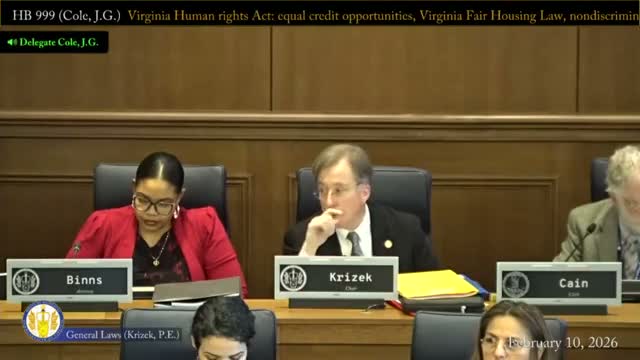
Summary
The General Laws subcommittee adopted a negotiated substitute for HB 999 narrowing scope to creditor credit decisions and requiring human review, and advanced HB 1514 to require safeguards and human involvement in state employment automated decision systems; both were referred to appropriations 21–0.
The House General Laws subcommittee on Monday advanced measures that curtail automated decision‑making in two areas: consumer credit and state employment.
Delegate Mark Cole (substitute sponsor) described a negotiated substitute to House Bill 999 that narrows the bill’s application to creditors who use automated decision systems — defined to include artificial intelligence and machine‑learning processes — in credit application decisions. Under the substitute, a natural person must review and approve the creditor’s final action before it is taken. Industry representatives including the Virginia Mortgage Bankers and the Virginia Bankers Association told the committee they had worked with the delegate and can support the substitute. The committee reported and referred HB 999 to Appropriations by a vote of 21–0.
The panel also moved House Bill 1514 (Delegate Tran), which focuses on automated decision systems used by state agencies in employment decisions. The bill would require agencies that use such systems as a substantial factor in employment decisions to ensure compliance with federal and state law, provide disclosures and an opt‑out mechanism, conduct annual testing and train staff, ensure data security, and prohibit making a final employment decision without the involvement of a human decision maker. Violations would expose employers to civil penalties under the bill as drafted. The committee reported HB 1514 and referred it to Appropriations 21–0.
Committee members noted the bills are intended to codify human accountability where automated systems affect credit and employment outcomes. In both cases the committee adopted language that narrows original proposals and reflects negotiated changes with stakeholders.
Quotes from the hearing
"When such a system is used, a human must review and approve the creditor's final action before it is taken," Delegate Cole said when explaining the HB 999 substitute.
"It defines automatic decision systems to include AI and machine learning based processes used in that context," Cole added, saying the change "codifies accountability in an increasing automated world."
What’s next
Both bills were reported and referred to the Committee on Appropriations 21–0 and will undergo fiscal review before additional floor or committee action.