Health and Human Services committee reports dozens of bills to appropriations and advances multiple health measures
Loading...
Summary
The committee used block votes and individual motions to advance numerous health, behavioral‑health and social‑services bills — including sickle‑cell measures, maternal and infant mortality review teams, licensure reforms for foreign‑trained practitioners, AED requirements for nursing homes and several social services pilot programs — most reported with substitutes or referred to appropriations.
The Virginia House Health and Human Services Committee moved a large docket of bills through voice votes and block votes during the session.
Among actions the committee reported or referred to Appropriations: a package of sickle‑cell bills (including HB 1391 and HB 1418) focused on coordinated access and awareness programs; HB 1398 to establish a fetal and infant mortality review team; HB 1403 to expand the maternal mortality review team to include severe maternal mental morbidity and to publish data on a Department of Health interactive dashboard; and HB 1418 to create a sickle cell trait awareness program. Committee leaders said those measures will require funding and noted emotional testimony from advocates and the secretary of health.
The committee also handled health‑professions and licensing legislation: HB 413 (high school certified nurse aide pathway) was amended so it will not go to appropriations; a group of health‑profession bills (HB 573, HB 577, HB 970, HB 1489) passed in block by voice vote; HB 1026 and HB 1036 advanced substitutes allowing licensure pathways for certain foreign‑trained chiropractors and dental hygienists; and HB 1522 would require nursing homes and assisted‑living facilities to maintain automated external defibrillators with trained staff.
Social services measures were advanced in blocks as well. Chair Tran’s subcommittee cleared a block including HB 632 (barrier crime waiver process for kinship foster homes), HB 838 (doula care under the state Medicaid plan), HB 1060 (barrier crimes consolidation for foster/adoptive homes), HB 1222 (child welfare interview recording requirements) and HB 1495 (oversight of Medicaid service facilitators) by a block vote. Several individual social‑services bills were also reported with substitutes and referred to appropriations for fiscal and implementation review.
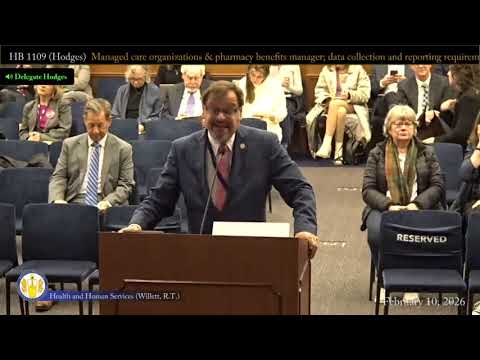
Votes at a glance (representative): HB 1109 — reported and referred to Appropriations (18–0); HB 656 — reported with substitute (17–1); HB 6610 — reported and referred to Appropriations (12–6); HB 1391 — reported with substitute (17–1); HB 1398 — reported with amendment (17–1); HB 1403 — reported with substitute (17–1); HB 1418 — reported (17–1); HB 1490 — reported with substitute and referred to Appropriations (14–6). Many other bills passed by block voice vote.
What happens next: Reported bills proceed to Appropriations for fiscal review and to any subsequent floor action; substitutes and amendments adopted in committee will be reflected in the version that advances.