
Virginia subcommittee backs substitute to allow qualified physician assistants to practice independently
Get AI-powered insights, summaries, and transcripts
Subscribe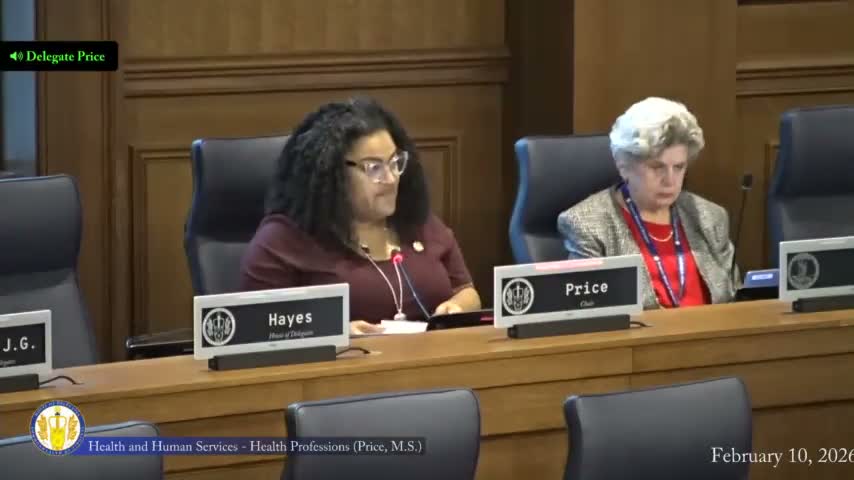
Summary
The House Health Professions Subcommittee voted 7–0 to report House Bill 746 with a substitute that lets physician assistants practice without a formal practice agreement after meeting three years (1,800 hours/year) of postgraduate clinical experience and providing an attestation from a collaborating physician or podiatrist.
The House Health Professions Subcommittee on Wednesday reported House Bill 746 with a substitute that would let qualified physician assistants practice without a written practice agreement after meeting specified experience and attestation requirements.
Delegate Marcia Henson, sponsor of the bill, told the panel the measure modernizes PAs’ scope of practice by allowing independent practice only after PAs complete the equivalent of three years of full‑time postgraduate clinical experience (defined in the substitute as 1,800 hours per year) and obtain an attestation from a patient‑care team physician or podiatrist who previously collaborated with them. "This puts us on par with nurse practitioners who are already practicing independently after meeting similar requirements," Henson said.
Attorney Erin Brooks, reporting the amendment in the nature of a substitute, said the language narrows independent practice to the PA’s specific clinical specialty or practice area and removes the Board of Medicine’s role in making determinations on experience and scope. The substitute permits the Board of Medicine to adopt regulations that accept other evidence of qualification and requires PAs who obtained licensure by endorsement or who practice under the interstate compact to provide an adequate attestation before practicing independently.
Supporters emphasized workforce and access benefits. Bobby Cochran, president of the Virginia Academy of PAs, said PAs ‘‘provide critically needed access to care each day’’ and urged passage on behalf of roughly 7,000 PAs in the state. Emily Waller, a family‑medicine PA practicing in a federally designated rural health clinic, described local primary‑care shortages and said the bill would let PAs ‘‘practice at the top of our license’’ without changing clinical scope.
Committee members asked whether other states have similar models; Jonathan Williams of the Virginia Academy of PAs said about eight states have comparable but varying hour requirements. No opponent testimony was presented in person. The subcommittee adopted the substitute and voted to report HB 746 to the next committee on a voice/roll call that the clerk recorded as recommended to report with substitute by a vote of 7 to 0.
The bill would not remove collaborative consultation in complex cases: supporters and the substitute maintain PAs must practice within their education, training and licensure and consult physicians when clinically appropriate. The measure now moves from the subcommittee to further committee consideration.