
K‑12 subcommittee advances slate of education bills, sending several to appropriations
Get AI-powered insights, summaries, and transcripts
Subscribe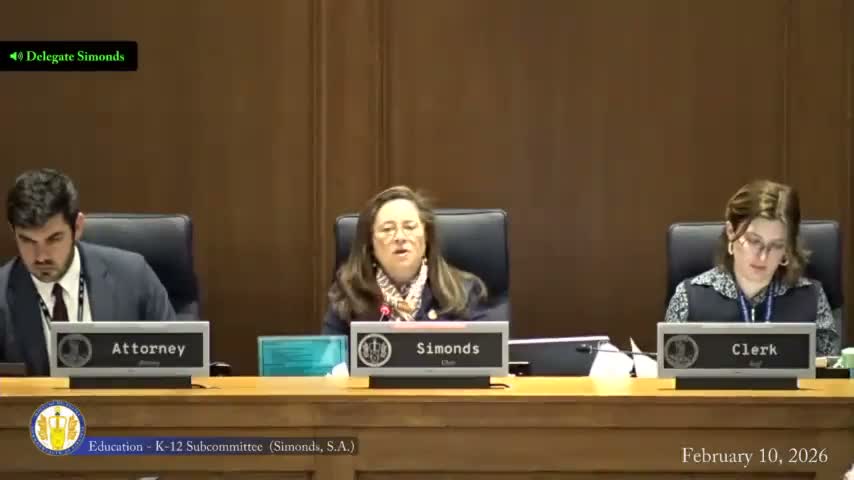
Summary
The House K‑12 Subcommittee moved multiple bills forward on Feb. 11, advancing measures on special education placement, indoor air quality, diabetes care in schools, CTE flexibility and driver education; several were amended and reported to appropriations or carried forward.
The House K‑12 Subcommittee heard hours of testimony Feb. 11 and voted to advance a package of K‑12 education bills, including measures on special‑education placement, indoor air quality testing, school health and career and technical education.
In a series of voice votes and recorded roll calls, the subcommittee amended and reported bills to the next stage or carried them over for later consideration. Notable outcomes included HB 894 (Charlie’s Law), which was amended and reported 10–0; HB 497, a data‑collection bill for denied IEPs and 504 plans, which reported 8–2 after the committee added privacy protections; HB 461, which limits routine classroom age spans in certain special education settings, passed 9–1 after friendly amendments including a delayed effective date; HB 13‑45 on indoor air quality was reported as substituted and referred to appropriations 7–3; and HB 13‑01 (school diabetes care provisions, consolidated from multiple drafts) was reported as substituted 10–0.
The subcommittee also moved HB 613, a teacher retention and mentorship pilot, to appropriations (reported 8–1) and advanced HB 1352 directing the Department of Education to update driver education materials to emphasize the dangers of reckless driving (reported 10–0).
Many bills prompted robust public testimony. Parents and family members described traumatic losses and urged action on bullying and driver safety. Education associations, school boards and unions frequently supported measures while asking for clarity on implementation costs or staffing implications. Industry experts and unions testified in depth during the indoor air quality debate about certification, acceptable credentials for testing and possible local fiscal impacts.
What’s next: most bills that were referred to appropriations will receive a fiscal review before final action; several substitutes were adopted by the subcommittee and will move toward full committee or floor consideration on the calendar.