Get Full Government Meeting Transcripts, Videos, & Alerts Forever!
Get email alerts on the Public Health topic
No spam. Unsubscribe anytime.
Subcommittee backs bill to expand sickle cell education to include cancer risk
Summary
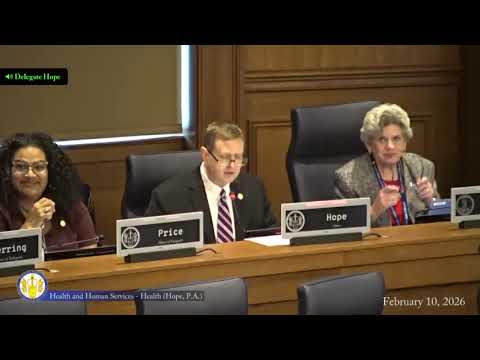
HB392, sponsored by Delegate Askew, was reported to Appropriations with a substitute to expand the state sickle cell program's education work to cover increased cancer risks including renal medullary carcinoma; the measure passed the subcommittee 9–0 after testimony from a patient and a governor's office representative.
Delegate Alex Askew presented HB392 and a substitute that refocuses the Virginia Sickle Cell Education Program toward culturally appropriate education about elevated cancer risks among people with sickle cell disease or trait, rather than requiring a new screening program for kidney cancer.
Askew said the substitute retitles the program to "sickle cell disease education and screening program, cancer risk" and ensures providers and families receive updated resources. He framed the change as a practical step to promote health equity by using an existing trusted program and to make information accessible in communities disproportionately affected by sickle cell.
Duane Stegall, who testified as a patient diagnosed with renal medullary carcinoma (RMC), said he learned his cancer was linked to the sickle cell trait and urged the subcommittee to support awareness and earlier detection. A representative of the governor's office offered administration support and cited testimony about the strong connection between sickle cell and RMC; that witness characterized the linkage as substantial and urged the committee to act.
The subcommittee reported the substitute and referred HB392 to Appropriations by a vote of 9–0. The substitute emphasizes education and the ability of the program to adapt as medical guidance evolves.