Get AI Briefings, Transcripts & Alerts on Local & National Government Meetings — Forever.
Subcommittee advances bill requiring open captions at Virginia movie theaters
Loading...
Summary
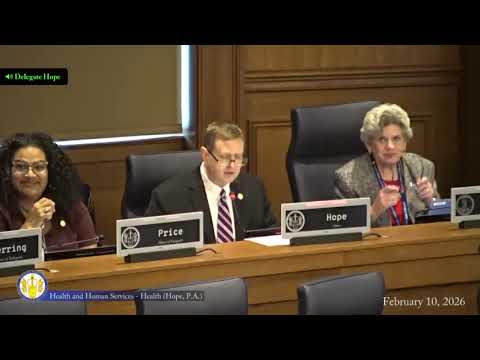
The Health and Human Services Subcommittee advanced HB602, sponsored by Delegate Hernandez, to require open captions for regularly shown films in Virginia theaters and to set timelines and advertising requirements for showing captioned screenings; the measure passed the committee substitute 8–0.
Delegate Matt Hernandez’s HB602 moved forward in the Health and Human Services Subcommittee after testimony from deaf and hard-of-hearing Virginians and disability advocates.
Hernandez, the bill’s patron, said the substitute clarifies that an “operating week” runs Friday through the following Thursday and changes the trigger for required open-caption screenings from films "regularly shown" to titles that have at least seven showings per operating week. The substitute maintains a 72-hour requirement for theaters to provide an open-caption showing after a request but adds an explicit exemption for screenings with advanced tickets already sold, and allows symbols other than “OC” to identify captioned presentations.
Hernandez described personal experience—growing up with a deaf sister—and said open captions are more reliable than assistive devices that can fail, be unavailable or be poorly maintained. "It's just this idea that captions should be visible on the screen in real time," he said.
Several committee members asked practical questions about how captions appear on screen, whether older films pose technical challenges and potential costs. Hernandez and witnesses said most new releases already include burned‑in caption tracks and that theater trade representatives negotiated the substitute language; the theater association did not raise cost concerns in the hearing.
Multiple witnesses testified in favor. Daphne Cox of Stanton said open-caption nights at her local Visulite Cinema were transformative and described how caption glasses and cup‑holder devices can be unreliable. Colleen Miller of the Disability Law Center of Virginia said the technology exists and litigation experience supports the policy. Kenneth Reichert of the Hearing Loss Association of America urged lawmakers to adopt the bill as a public‑health and access measure.
The substitute requires larger theater chains (defined in the bill as those with five or more locations) to provide four open‑caption showings within the first two weeks of a film’s release, including at least one during peak hours; it requires smaller theaters to provide an open‑caption showing within eight calendar days of a request and to advertise captioned showings so patrons can plan. The substitute also permits marking captioned showings with alternatives to the character string "OC."
The subcommittee adopted the substitute and reported HB602 by a roll call vote of 8–0. Next steps: the bill was reported out of the subcommittee and will proceed through the legislative process as substituted.