Get Full Government Meeting Transcripts, Videos, & Alerts Forever!
Get email alerts on the Stormwater Fee topic
No spam. Unsubscribe anytime.
Murrysville council weighs $7 monthly stormwater fee to fund repairs and MS4 compliance
Summary
Council heard a detailed presentation and Q&A on a proposed stormwater fee that would average $84 per year for typical single-family homes, generate about $965,000 annually, and be based on impervious surface ERUs; council directed staff to advertise the ordinance for public comment.
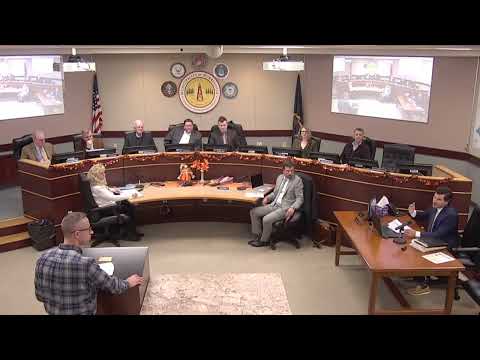
Council members spent the bulk of their meeting on a workshop about a proposed stormwater fee intended to create a dedicated funding stream for stormwater infrastructure, repairs and compliance with state MS4 permits.
Chief Administrator Mister Nastika and representatives from consulting firm LSSE told council the study began in 2023 and recommends a fee roughly $7 per month — about $84 a year for the average single-family home — using an equivalent residential unit (ERU) approach based on aerial analysis. The consultant said the proposal would apply to about 8,457 billable units and is estimated to generate approximately $965,000 annually. Of those units, 7,849 (92%) would pay $126 a year or less; about 292 accounts (3.5%) would be billed more than $294 a year, and the top 12 accounts could see bills above $3,900 annually, including municipal and school properties and several corporate sites.
The presentation framed the fee as a replacement for general fund spending on stormwater. "Right now the stormwater infrastructure and the stormwater repair projects... are all basically coming from the general fund," Mister Nastika said, adding that a dedicated fee would free general fund dollars for other priorities. He noted the municipality faces an unfunded mandate: continued DEP and EPA MS4 requirements and future permit changes that will require additional capital work.
Council raised operational and equity questions. Members asked whether the $965,000 projection would cover all needs and whether liquid fuels or general fund balances could reduce the fee. LSSE explained the $965,000 is a substantial first step but not a complete solution; administrative costs of roughly $90,000 were included in the projection, and estimated billing/mail costs of $10,000–$15,000 annually would be needed for collections. The consultant also described a typical credit and appeals process for on-site stormwater improvements and said staff would solicit billing proposals if council advanced an ordinance.
Several council members expressed concern about affordability and long-term increases. "Not everyone in this community can afford $84 a year," a council member said during questioning. Staff and the consultant responded that the ERU selection (an average of about 5,800 square feet in this study) was intended to balance administrative feasibility with fairness, acknowledging there will be outliers.
Following discussion, the council gave staff direction by straw poll to advertise an ordinance reflecting the $7/month figure and add the matter to the next meeting agenda for formal advertisement and further public comment. The advertisement step would precede a later vote to adopt the ordinance.
Next steps spelled out by staff include drafting a fee ordinance that sets the ERU and tiers, deciding billing frequency (yearly for many single-family homes, quarterly or monthly for larger accounts), soliciting billing vendors, and creating a credit and appeals process. The consultant said the next MS4 permit cycle and a separate "volume management" requirement will add future capital benchmarks and estimated costs to the municipality’s obligations.
If council pursues the ordinance, the public will have additional opportunities to comment before any final vote.