Get Full Government Meeting Transcripts, Videos, & Alerts Forever!
Get email alerts on the Stormwater Fee topic
No spam. Unsubscribe anytime.
Murrysville advertises stormwater fee ordinance amid resident concerns and questions about credits
Summary
The borough advertised Ordinance 1108-25, a stormwater utility fee that staff estimates could generate about $965,000–$1,000,000 annually; council approved advertisement while residents and property owners pressed for clearer credit criteria and billing details.
Council members voted to advertise Ordinance 1108-25, a proposed stormwater fee that would create a dedicated revenue stream for stormwater work, after an extended discussion about credits, billing and projected revenue.
Staff said the consultant’s analysis projects roughly $965,000 to $1,000,000 in annual revenue under the draft structure. Administration described current stormwater spending as an estimated $300,000 to $500,000 per year and said the fee would fund deferred maintenance, equipment replacement and compliance work tied to future NPDES/MS4 requirements. Staff cautioned the fee alone would not eliminate major, site-specific flooding problems.
Michael Nestico, chief administrator (first referenced SEG 024), explained how a credit program would work: property owners would submit an application documenting on-site stormwater controls, the municipality would inspect and grant credits where warranted, and appeals would be handled by council. Nestico said typical programs offer credits up to about 50% for properties with qualifying controls and that the credit program’s detailed rules would be set later—by resolution or policy—if council moves forward.
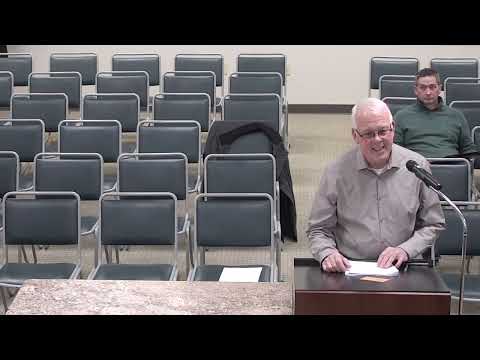
Commercial property owners and a developer who spoke during public comment said they had already spent substantial sums to meet local stormwater requirements and asked that the credit program recognize prior investments. Kirk Rittiger (public comment, first referenced SEG 325) told council he had spent roughly $200,000 installing required stormwater mitigation and urged clear, accessible guidance for credits to avoid double-charging compliant properties.
Staff described billing options and examples. With the draft residential rate framed as $7 per month (billed as a single $84 annual payment in many communities), staff said larger commercial ratepayers could face substantially higher annual bills but would also be eligible for credits and alternative billing frequencies (quarterly or other arrangements) to ease cash-flow impacts.
Councilor Carl moved to advertise the ordinance; the motion was seconded by Jamie and passed unanimously. Staff said detailed credit policy, billing mechanics and any payment programs would return to council for approval before bills are issued; if adopted on the timetable discussed, bills would likely be mailed in the first quarter following passage to allow time for billing provider setup.
The advertisement does not finalize fee amounts or credit rules; it begins the statutory process that allows for public review and a future council vote on final ordinance language. If council proceeds to set the fee as discussed, staff said billing would not be sent immediately and that the municipality would publish credit criteria and application steps prior to the first billing cycle.