Get Full Government Meeting Transcripts, Videos, & Alerts Forever!
Get email alerts on the Stormwater Fee topic
No spam. Unsubscribe anytime.
Murrysville council approves $7-per-ERU stormwater fee after debate over sampling and credits
Summary
Murrysville Borough Council approved ordinance 1108-25 establishing a $7-per-ERU monthly stormwater fee and a future credit program after extended debate over sampling methodology, equity between property types and appeals procedures; vote was 5–1.
Murrysville Borough Council voted to approve ordinance 1108-25, creating a dedicated stormwater utility funded primarily by a $7 monthly fee per equivalent residential unit (ERU), a municipal official said during the Dec. 18 meeting.
The measure passed after a roll-call vote in which Missus Ling voted no and five councilmembers voted yes. The ordinance formalizes a dedicated stormwater fund, sets the ERU at 5,800 square feet of impervious surface for the borough per the engineering study, and directs staff to develop a credit program by municipal resolution in the coming months.
Why it matters: Council and staff said state MS4/NPDES permit requirements and increasingly stringent permit cycles make a dedicated, trackable revenue stream necessary to maintain and upgrade the stormwater network of pipes, culverts and detention basins. Michael Nesta, the borough’s chief administrator, told council the engineering study recommended separating stormwater into its own fund and using the ERU method to distribute costs more equitably among contributors to runoff.
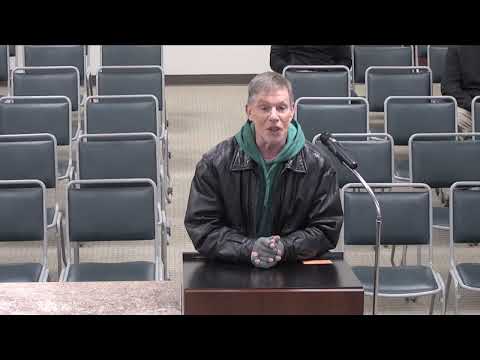
Resident concerns and council debate: Bob Shepherd, a resident who spoke during public comment, asked, “What are people going to get for this fee?” and urged transparency on how municipal revenues — including one-time oil-and-gas lease payments — are used. Michael Nesta said those lease proceeds are held for parks capital projects and are not a sustainable, recurring revenue source for ongoing stormwater operations: “That is a well that runs dry,” he said, adding the fee creates a predictable fund for maintenance and capital work.
Several councilmembers pressed for more precision in the study’s sampling and in how the ERU is applied. One councilmember argued that Murrysville’s widely varying property sizes make random sampling less reliable and urged a different sampling approach; others said a second study would likely use the same state-approved algorithm and add cost without changing results. Council discussion repeatedly returned to whether the ERU and the two-table approach for single-family/attached units yielded inequities for some homeowners.
Credits and appeals: Nesta said the ordinance includes language enabling a credit program that council will design and adopt by resolution, expected in the first quarter of next year. Larger commercial or newer properties that have invested in on-site mitigation would be eligible for engineer-reviewed credits; staff would first review appeals administratively and, if contested, an appellant could bring the matter to council for review at a public meeting.
Vote and next steps: The council adopted the ordinance by roll call (Missus Ling: No; Mister Stepanovich: Yes; Mister McKenna: Yes; Mister Lemak: Yes; Mister Olcheski: Yes; Mister Dice: Yes). Staff will draft the credit manual and present it via resolution for council consideration in early 2026. The ordinance authorizes staff to implement the billing and appeal processes described in the ordinance and accompanying credit manual.
Context and limits: Council members repeatedly acknowledged no fee system is perfect and that the ERU method is the state-recommended approach. Staff and council said detailed line-item tracking will follow once the stormwater fund is in place, improving transparency around revenues and expenditures. The ordinance does not change existing capital allocations funded by one-time lease revenues, which staff said remain earmarked for parks projects.