
Washington County corrections advisory board elects new officers, approves 2027 budgets and policies; opioid grant applicant withdraws
Get AI-powered insights, summaries, and transcripts
Sign Up Free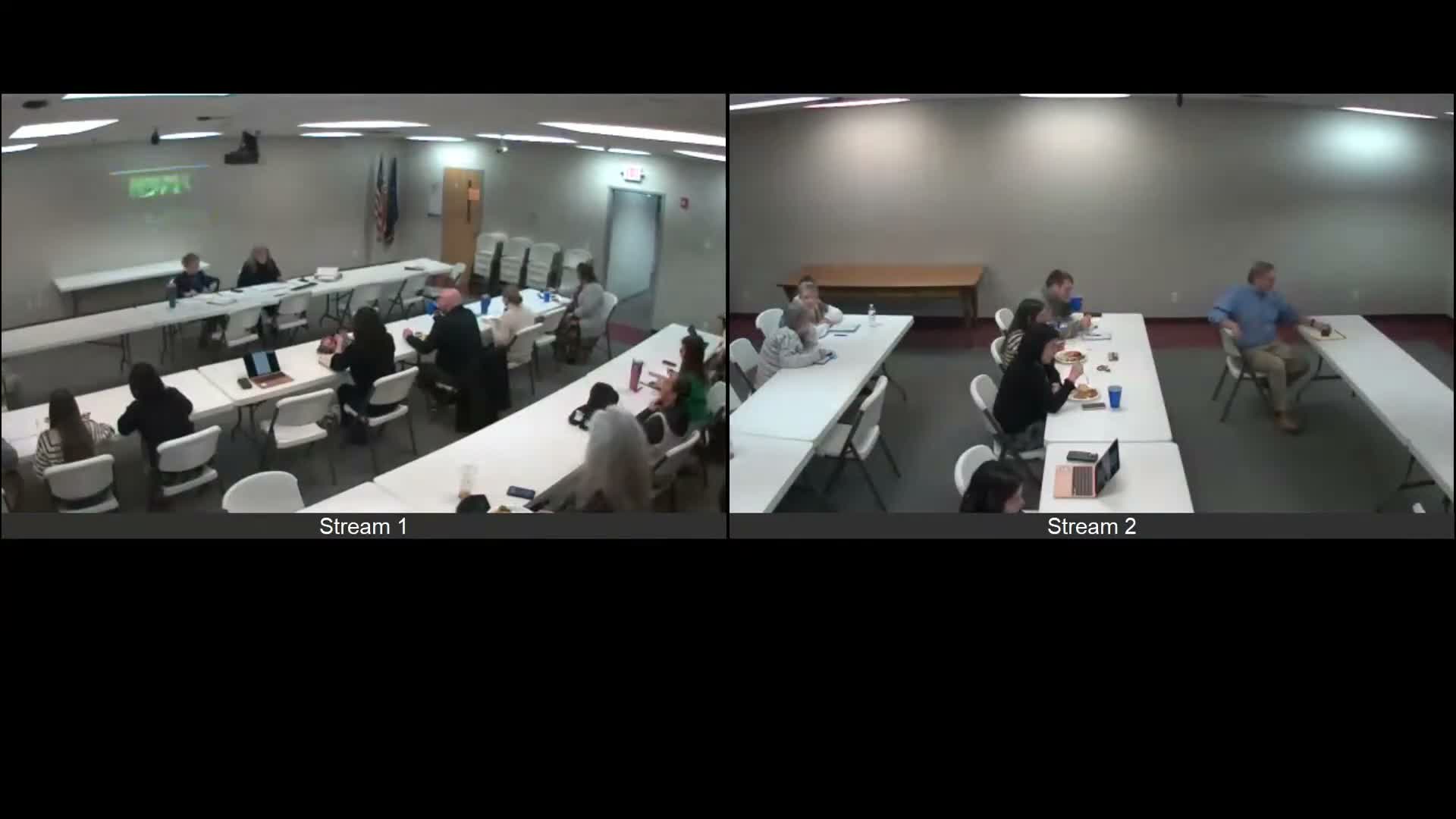
Summary
At a Washington County corrections advisory board meeting, members elected Tara Coates Hunt as chair and Dustin Howchinger as vice chair, approved the 2027 community corrections and Veterans Treatment Court budgets and two policies, and recorded the withdrawal of a recovery-house funding application from White House Recovery.
The Committee Corrections Advisory Board and the Washington County Justice Reinvestment Advisory Board elected new leadership, approved two 2027 budgets and adopted two policies at a meeting called to order at 12:02 p.m.
Board members voted by show of hands to appoint Tara Coates Hunt as chair and Dustin Howchinger as vice chair after the previous chair announced he had tendered an earlier resignation but remained through today’s meeting at the judges’ request. The chair told members the board is mandated by statute and opened nominations before the vote.
The board approved the 2027 community corrections budget and the 2027 Veterans Treatment Court budget after motions and seconding from members; the meeting record indicates both passed by show of hands, but specific counts were not provided. The board also approved a quality assurance policy and the Washington County collaboration plan; Brandon Blake’s electronically submitted vote in favor was noted during the quality assurance vote.
Board leadership and staff reviewed program materials, including the community corrections 2025 annual report and participant summaries, and three financial reports covering community corrections monthly statements for October–December 2025, a notification of transfer of funds, and the Veterans Treatment Court 2025 calendar-year report. Members raised no substantive questions during the presentations.
The chair recounted the role of the opioid-settlement subcommittee — formed at the county commissioners’ request to develop application processes and ensure restricted settlement funds are used for opioid addiction abatement — and described subcommittee duties including application review, applicant research, and oversight of disbursements and quarterly reporting to the commissioners. He said the subcommittee has recommended funding for several programs and declined others that did not meet established criteria.
The chair reported that White House Recovery had applied in March for funding for a recovery house intended for an initial population of four to eight women but that the application was withdrawn during today’s meeting after the subcommittee requested additional information, application revisions and a contingency plan. The chair also said some applicants used public campaigns and emails to press board members when the subcommittee did not immediately recommend funding; he rejected suggestions the subcommittee was mismanaging funds or acting from bias and described the committee’s combined experience of more than 100 years in the community.
The board set its next meeting for April 14, 2026, at noon, with the subcommittee meeting a half-hour earlier, and adjourned.