Get Full Government Meeting Transcripts, Videos, & Alerts Forever!
Get email alerts on the Cdbg Home Prioritization topic
No spam. Unsubscribe anytime.
McHenry County panel asks large CDBG/HOME applicants to prioritize after surge in requests
Summary
The McHenry County Community Development and Housing Grama Commission agreed to ask applicants whose requests exceed the minimum award to prioritize or scale back proposals ahead of April presentations, after staff said roughly $1.3 million is available and applicants requested several times that amount.
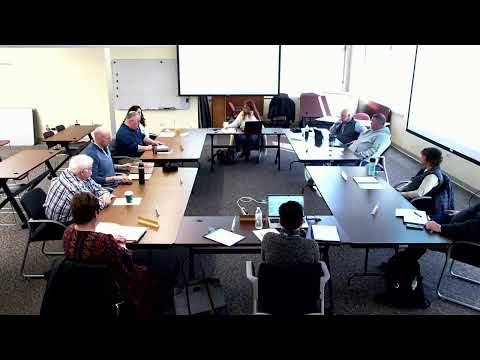
The McHenry County Community Development and Housing Grama Commission on Wednesday asked applicants seeking Community Development Block Grant (CDBG) and HOME funds to prioritize or scale back requests ahead of April presentations, after staff told commissioners that available funding is far smaller than the total in proposed projects.
Sarah (county staff) presented the application spreadsheet and said the commission has "roughly 1.3" million dollars available and that CDBG applicants have submitted more than $5.2 million in requests. She told the commission this first review was intended to remove applications that commissioners prefer not to take forward to full presentations.
Commissioners debated how to cut the list without unfairly pre-selecting projects. One commissioner flagged the City of Woodstock's $1.1 million request for water-softener replacements as an example of a single ask that could absorb a large share of funds; members discussed asking large applicants whether they could request partial funding or present scaled options. "If they can ask for a partial amount, that still takes away from the other big ones," one commissioner said during the discussion.
Several commissioners said many familiar organizations repeated multiple asks—Home of the Sparrow, Habitat for Humanity and Pioneer Center among them—and suggested asking multi-project applicants to present once and state priorities. The commission coalesced around a plan to send a fair, written notice to all applicants whose requests exceed the minimum grant threshold asking them to: (1) confirm their priority among multiple asks, (2) provide scaled-down minimum figures the commission could consider, and (3) disclose other funding sources. Staff said they will prepare a side-by-side sheet comparing this year’s asks to last year’s awards and will email updated totals to commissioners before the April meeting.
Commissioners also discussed presentation logistics. Members suggested shorter time allotments for applicants that present multiple projects (one presentation with prioritized asks), reserving longer slots for large infrastructure proposals. The commission agreed staff should return updated totals and the letter to applicants ahead of the April session so presentations and deliberations can be concentrated into roughly two days.
What happens next: staff will send the prioritization letter and an updated comparison to commissioners; applicants who requested more than the stated minimum will be asked to confirm priorities or provide scaled-down requests before the April presentations, where commissioners will deliberate and make funding decisions.