Lifetime Citizen Portal Access — AI Briefings, Alerts & Unlimited Follows
Utah Senate advances education, public-health and child-welfare bills on Day 22; many measures sent to House
Loading...
Summary
On day 22 the Utah Senate advanced a slate of bills on the third-reading calendar — including dyslexia testing, school medication rules, charter eligibility, public–higher-education collaboration, pediatric care, child-welfare cleanup, and multiple technical fixes — and voted to circle several bills for later action.
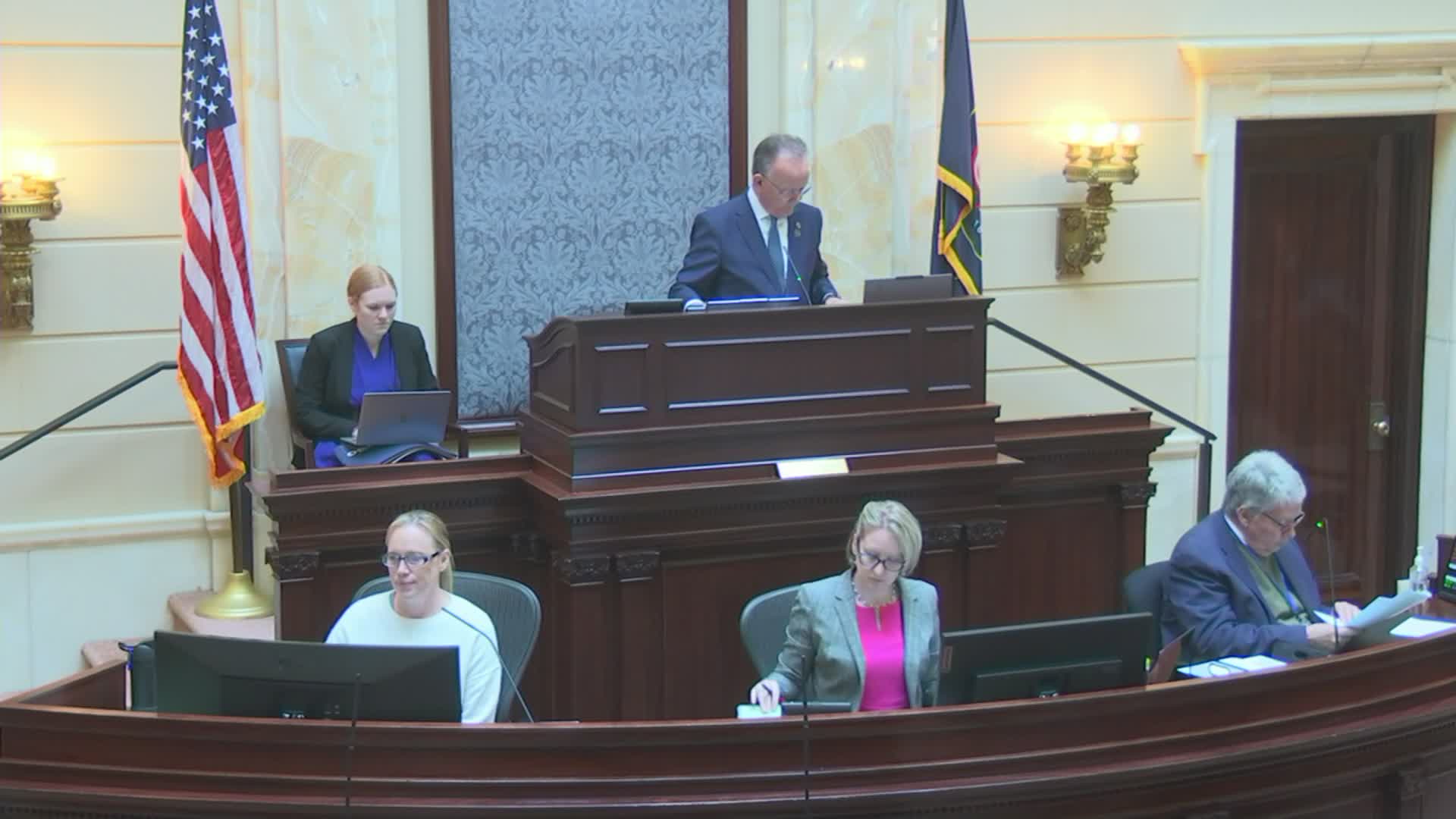
The Utah Senate on day 22 moved or passed a broad set of third-reading items and procedural motions. Most items were presented briefly and then voted on; the chamber also used 'circle' motions to pause consideration of several bills.
Key votes and outcomes
- Second substitute SB81 (dyslexia testing amendments): Sponsor Senator Plumb said the bill expands who may perform assessments and clarifies diagnostics; the Senate passed the bill with 24 yea, 0 nay, 5 absent and will send it to the House.
- SB104 (school medication amendments): Senator Plumb said the measure consolidates medication policy for consistency; the Senate passed the bill 23–0, 6 absent and will send it to the House.
- SB131 (charter school eligibility): Sponsor Senator Baldry explained why the bill uses 'political subdivision' to permit special lottery-preference boundaries in fast-growing cities; the bill passed 22–3, 4 absent and will be transmitted to the House.
- SB152 (public and higher education collaboration): Senator McKell said the bill simplifies data-sharing and includes privacy safeguards with opt-out provisions; the bill passed 26–0, 3 absent and will be sent to the House.
- SB55 (placental tissue amendments): Senator Vickers described a fix authorizing practitioners to provide patient notifications; the bill passed 25–0, 4 absent.
- SB66 (medical cannabis pharmacy license amendments): Sponsor Senator Bickers said the bill restores intent that licenses remain region-bound; passed 25–0, 4 absent.
- SB83 (controlled substance scheduling amendments): Sponsor Senator Vickers said the bill aligns state scheduling with federal FDA/DEA decisions and preserves the advisory committee’s authority to recommend stricter controls; passed 27–0, 2 absent.
- SB127 (pediatric care amendments): Senator Plumb reported agency staff do not expect additional ER workload; the bill passed 28–0, 1 absent and will be sent to the House.
- Second substitute SB141 (child welfare amendments): Senator Harper described this annual cleanup for DCFS and guardian ad litem procedures (information-sharing limits, definition clarifications and notification rules); the bill passed (reported as passing with 24 yea votes, 5 absent in final roll call reporting) and will be sent to the House.
Bills circled for further work
The Senate voted to circle several bills for follow-up work or amendments, including SB77 (dual language immersion amendments), SB167 (reintegration for disciplined students), SB49 (natural organic reduction), SB145 (lobbying amendments) and SB137 (homeless services board amendments).
Procedure and next steps
President Adams announced the Rules Committee would meet after the recess. Senators made brief recognitions for visiting groups, including BYU students and a delegation from Alberta, Canada. The Senate recessed until 2:00 p.m.
Vote tallies here reflect on-floor roll calls as read into the record by the clerk; individual roll-call lines in the transcript sometimes contained partial or duplicated names and were recorded as read on the floor.