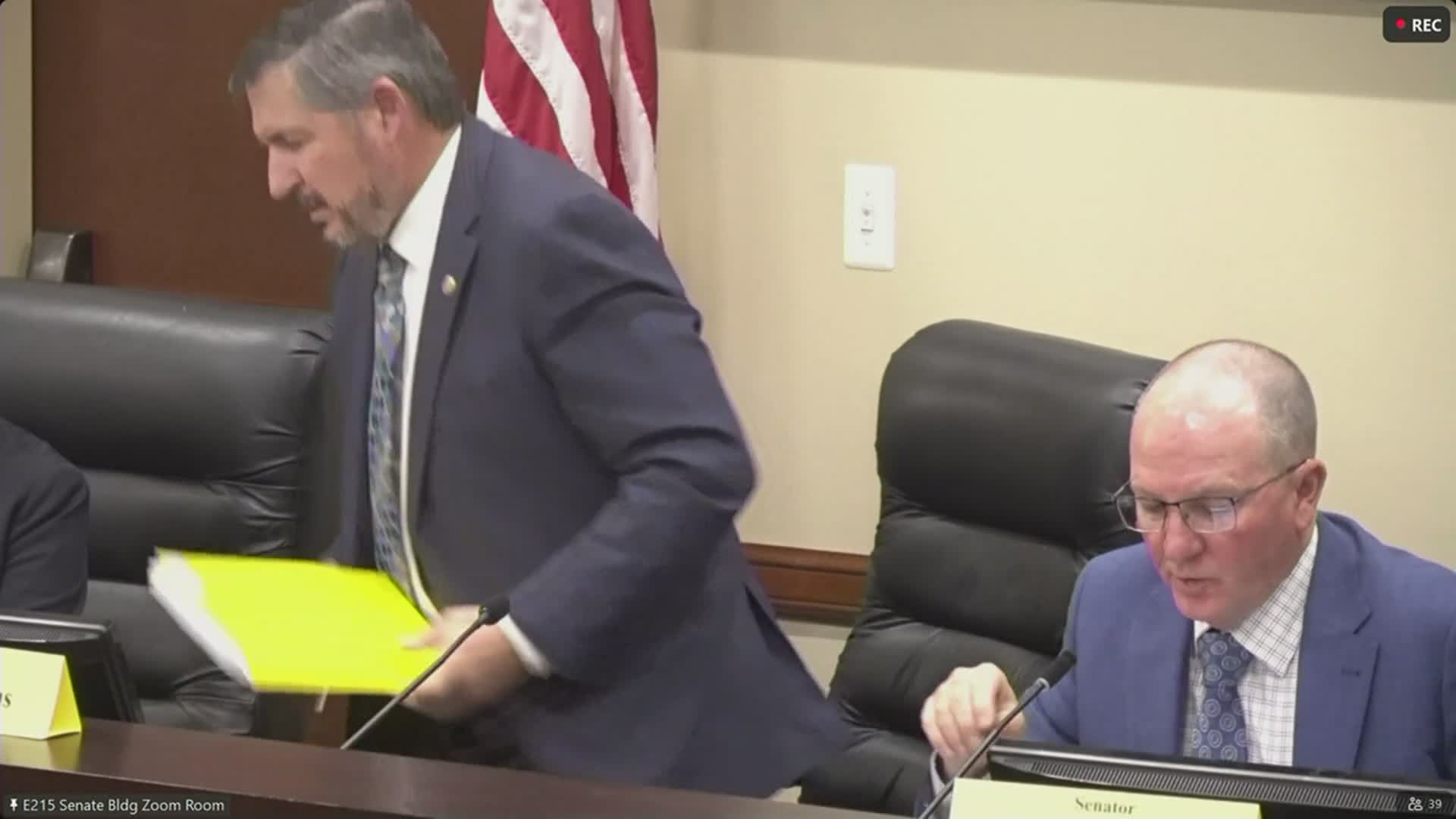
Senate committee backs study of Gooseberry Narrows site after debate over water rights and fisheries
Loading...
Summary
The Natural Resources committee voted to favorably recommend Second Substitute S.B. 209 directing Utah State Parks to study Gooseberry Narrows as a potential state park and reservoir site; testimony highlighted long‑standing water rights (filed 1941), an estimated 14,500 acre‑feet authorization and competing concerns about impacts to downstream fisheries.
A Senate Natural Resources, Agriculture and Environment Committee on [date not specified in transcript] voted to favorably recommend Second Substitute Senate Bill 209, which asks Utah State Parks to study whether the Gooseberry Narrows area could become a state park and to evaluate water‑storage options.
Sponsor Senator Owens told the committee the proposal is intended as a fact‑finding study rather than an immediate authorization to build infrastructure. He said the project’s water‑rights record stretches back to filings in 1941 and that current permits authorize roughly 14,500 acre‑feet of diversion and storage per year, of which about 5,400 acre‑feet can be delivered into the Sanpitch (Sanpete) River system. Owens said the substitute removes authority for parks to enter agreements with federal agencies and water districts and narrows the bill’s fiscal exposure compared with an earlier fiscal note the sponsor described as $60 million-plus.
The bill drew mixed public reaction at a committee hearing. Justin Jackson, representing the Sanpete Water Conservancy District, urged the study and said Sanpete had already conceded two‑thirds of its original water rights to downstream uses and that responsibly developed storage would stabilize flows for agriculture and fisheries. Nate Broadhurst, an attorney for the Sanpete district, observed the rights supporting the project remain in good standing and cited a 2009 legislative resolution as prior legislative support for development.
Opponents said the committee should weigh ecological impacts. Herbert Lay, who described long experience fishing Lower Fish Creek, called the creek ‘‘one of the finest fisheries in the state’’ and warned that reductions in flow could damage Colorado cutthroat trout habitat downstream. William Butcher, representing the Price River Water Users Association, said users on the Price side of the mountain have long depended on existing flows and cautioned that out‑of‑basin transfers can be effectively permanent because there are no return flows.
After discussion the committee adopted the second substitute and then voted to recommend the bill to the full Senate by a recorded margin the chair announced as 4–1.
What happens next: The committee’s recommendation sends the second substitute to the full Senate for further consideration. The bill as reported directs State Parks to conduct a study; any decision about construction, storage‑operation or transfers would be subject to later authorizations and permitting processes.