Committee backs rule change to allow in‑person jury selection for felony cases, despite court objections
Loading...
Summary
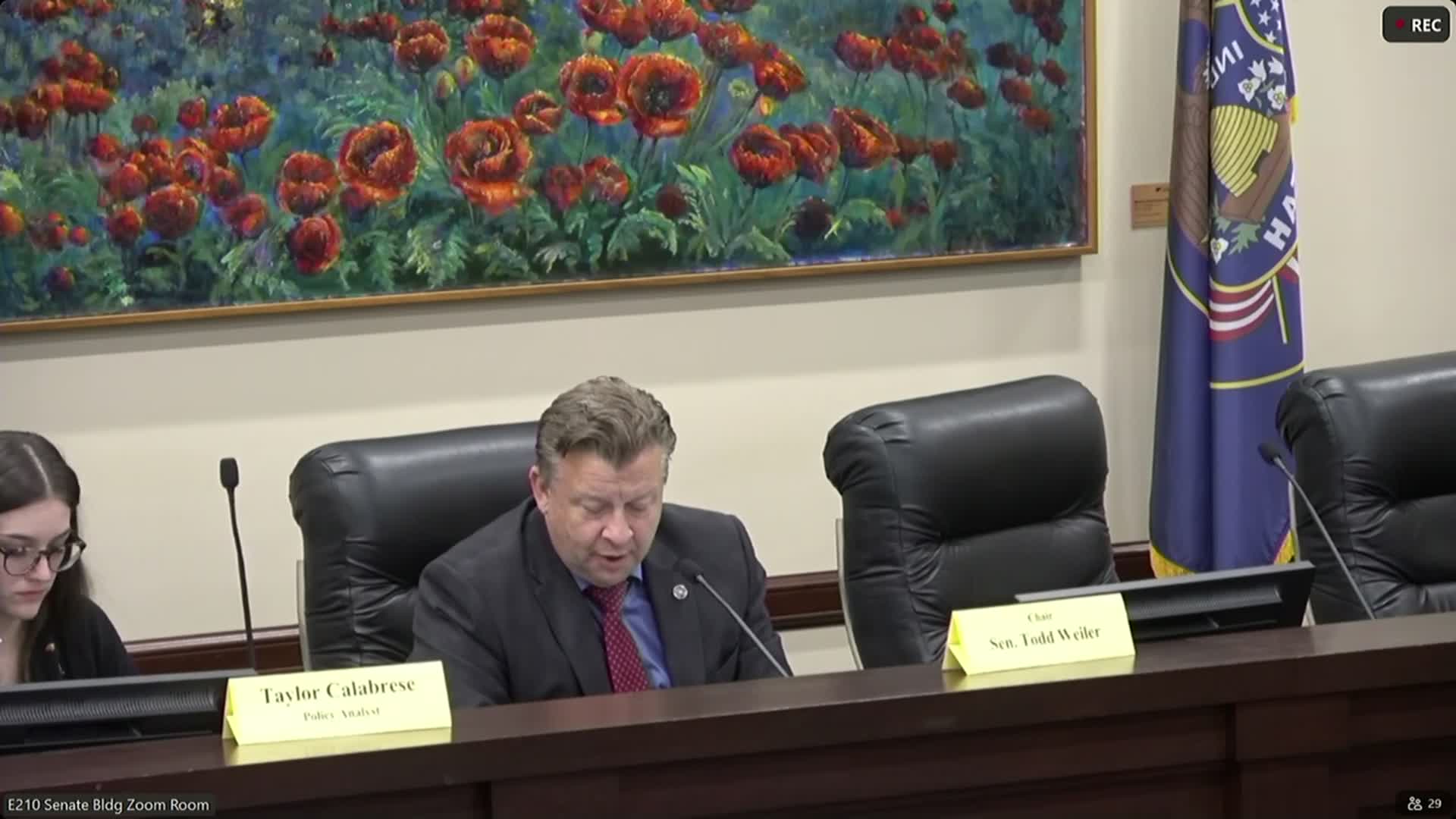
Senate Joint Resolution 10, which would require in‑person jury selection for felony cases (removing a blanket virtual‑selection rule), was favorably recommended by the committee 7–1 after competing testimony from court administrators who warned the change would reduce efficiency and prosecutors and defense counsel who said in‑person selection preserves legitimacy.
Senator McCall introduced SJR10 as a simple rule change to permit in‑person jury selection in felony cases, saying prosecutors and many defense attorneys have requested the ability to select jurors in person. “When we've got criminal defense attorneys and prosecutors that are both asking for this rule, I think it just makes sense,” he said.
Michael Drexel, assistant state court administrator, testified in opposition and urged caution. He told the committee that virtual jury selection in counties such as Salt Lake allowed the courts to summon and screen many more potential jurors with less burden on jurors, law enforcement and litigants. Drexel said Salt Lake County summoned 13,000 citizens to jury service in 2025 and that virtual selection reduced time, travel and jail waits while increasing throughput. “If we do that in person, we can get 3 or 4 juries [per day],” he said, “and defendants wait longer in jail for a trial.”
Defense lawyers and prosecutors pushing for the change said in‑person selection can be critical in serious cases where observing demeanor, body language and physical appearance — including tattoos or attire — matters to counsel and to the perceived legitimacy of the process. Mark Moffat, a criminal defense lawyer, described the Corey Richins case as a catalyst for the request and said counsel sometimes must see jurors in person to assess credibility.
Committee members debated the tradeoffs between efficiency and courtroom discretion. Some members emphasized judicial independence and recommended a rule‑based fix or a procedure allowing parties to file a motion for in‑person selection; others pointed out situations where courts had denied requests for in‑person voir dire in capital or other felony cases.
Senator McCall moved to favorably recommend SJR10. Following public testimony and committee discussion, the motion passed on a roll call vote recorded as 7–1. Proponents and opponents said the resolution will likely be refined as it moves to the next stage, including potential language to preserve judicial discretion in some circumstances.
The committee’s recommendation advances the rule change so the Legislature and courts can resolve how to balance flexibility, jury legitimacy and administrative efficiency.