Get Full Government Meeting Transcripts, Videos, & Alerts Forever!
Get email alerts on the Elections Citizenship topic
No spam. Unsubscribe anytime.
Senate committee advances bill requiring proof of U.S. citizenship for full state ballots after heated debate
Summary
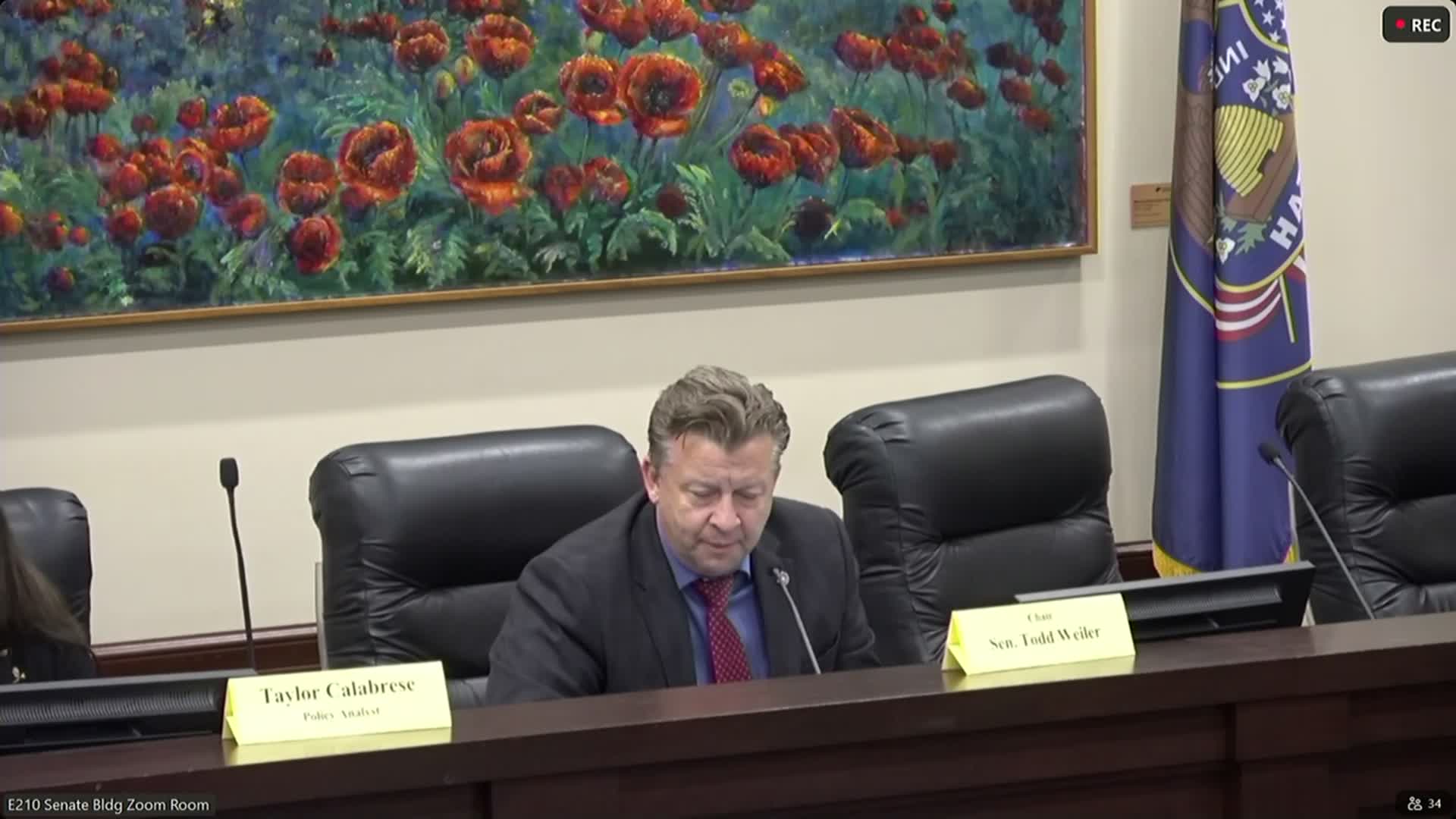
After hours of public testimony from election officials, civic groups and county clerks, the Senate Judiciary committee voted 5–2 to favorably recommend the third substitute of HB209, which requires proof of U.S. citizenship to receive a full state ballot while preserving provisional and federal‑only voting rights during verification.
Representative Todd Malloy, sponsor of the third substitute to House Bill 209, told the committee the bill aims to protect the meaning of citizenship in Utah elections while preserving eligible voters’ ability to cast federal ballots during any review. “The bill creates a clear, transparent distinction between federal voting rights and state election requirements,” Malloy said.
The bill would require state and local ballots to be issued only to registered voters who provide documentation of U.S. citizenship, while allowing individuals to cast provisional or federal‑only ballots during a verification period. Malloy and supporters said the measure also includes a name‑change accommodation so naturalized citizens and others can show linked documents (for example, a birth certificate plus marriage certificate) and a cure period for voters to complete verification.
Opponents said the change risks disenfranchising eligible voters and creates administrative hurdles. Ellen Moser of the League of Women Voters called the change “a rushed approach” and said the Lieutenant Governor’s audit of 2.1 million records found almost no evidence of noncitizen voting; she urged postponement. “Noncitizens are not willing to risk their immigration status and their future just to cast one vote,” Moser testified.
Utah County Clerk Aaron Davidson provided local election experience and said he had encountered a small number of registrations linked to people applying for naturalization; he spoke in support of the bill as a tool to identify and correct registrations where citizenship is not confirmed. Several county clerks and the bill’s backers argued that even a few improper registrations are too many and that the bill will help clean voter rolls while preserving an opportunity to cure and to cast provisional ballots.
Committee members pressed on implementation timelines and data. Senator Brammer and others cited a Lieutenant Governor‑led review that found one confirmed noncitizen who had not voted, but also identified hundreds of records missing citizenship fields; committee discussion repeatedly noted tension between minimizing disenfranchisement and improving roll accuracy.
Senator Brammer moved to favorably recommend the third substitute of HB209. The committee approved the motion on a roll call, 5–2. According to the committee discussion the bill’s effective or implementation timing was set to allow counties time to adapt; Representative Malloy said the bill would allow provisional ballots and a cure period up to the last business day before canvass to establish citizenship for a full state ballot.
The committee’s vote advances the bill to the next floor consideration. Further amendments and implementation details — including the precise administrative process and timeline for cures — were discussed repeatedly during testimony and may be adjusted as the bill proceeds.