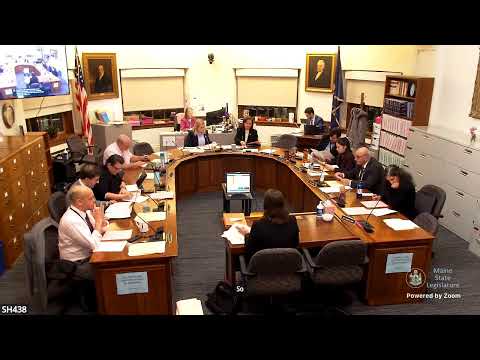
Committee Tables Assigned-Counsel Funding Bill After Dispute Over Language
Loading...
Summary
Members reviewed amendments to LD 2059, which would fund reimbursement for assigned counsel. A minority amendment changing employment status/collective-bargaining rules prompted debate; after motions to reconsider and delay, the committee adopted a tabling motion and tabled LD 2059 by show of hands.
Aug. 6, 2026 — During language-review proceedings the Joint Judiciary Committee examined amendments to LD 2059, a bill to provide required funding for reimbursement of assigned counsel. The committee heard competing majority and minority reports and then engaged in an extended procedural debate about whether significant policy changes in the minority report had been noticed for public hearing.
Janet, committee staff, explained the majority report removed language creating a public defender office in Cumberland County and retained an emergency preamble while the minority report included a provision amending collective-bargaining laws to exclude public defenders and employed counsel from the State Employee Labor Relations Act.
Several members urged caution before adopting the minority provision without a separate public hearing. Representative Caruso urged colleagues to support the majority report so affected employees would have an opportunity to testify. Representative Sinclair moved to reconsider prior action; Representative Sato seconded. After a short caucus and additional discussion about the importance of emergency funding for indigent-defense payments, Representative Sinclair moved to table the matter. The tabling motion was put to a show of hands and adopted by those present; the clerk announced LD 2059 "has been tabled."
Committee debate emphasized competing priorities: getting emergency payments to attorneys who have done work and avoiding imposing unvetted changes to employment and collective-bargaining rights without a public hearing. Members repeatedly warned that delaying emergency payments could harm representation for people on the unrepresented list; committee staff reported the unrepresented list had reached a historic low of 172 people but that many were concentrated in Aroostook County and Penobscot County and still required assigned counsel.
What's next: LD 2059 will remain tabled pending further action; members signaled options including separating the emergency funding from unvetted employment-language or scheduling additional hearings so affected parties can testify.