
Maine Judiciary Committee Hears Bill to Let People Sue Over Alleged Unlawful Detentions
Get AI-powered insights, summaries, and transcripts
Sign Up Free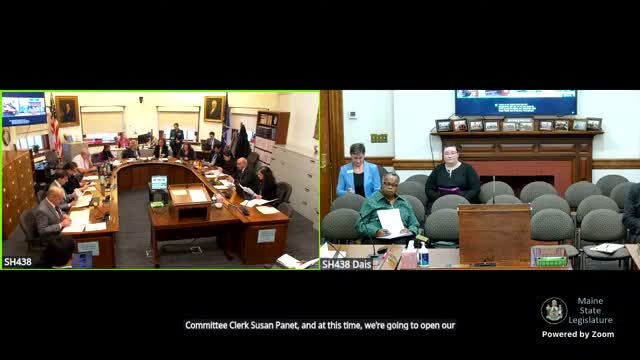
Summary
Lawmakers and advocates told the Judiciary Committee that LD 2176 would create a private right under the Maine Civil Rights Act for people allegedly unlawfully detained — most testimony supported the idea, while the Department of Corrections warned ambiguous language could overreach. The committee closed the hearing without a vote.
Aug. 6, 2026 — The Joint Standing Committee on Judiciary heard testimony on LD 2176, a bill the sponsor said would allow people who are found unlawfully detained to pursue civil remedies under the Maine Civil Rights Act and help expand access to counsel for indigent detainees.
Senator Jill Duson, the bill sponsor, told the committee the sponsor's amendment is a strike-and-replace that simplifies earlier language and connects relief to existing court remedies. "The simple concept we propose is that there should be consequences for bad behavior," Duson said, explaining the bill would allow persons who have been released by a judge after demonstrating unlawful detention to bring a civil action for damages and attorney's fees.
Duson described recent enforcement tactics she said have prompted the measure, saying agents in some operations had used aggressive methods and that the bill seeks to "strike that same balance statewide" between public safety and civil liberties. "When law enforcement does not [conduct itself within Maine law] and they intentionally deploy tactics that are not lawful, residents must have a legal recourse to assert their inalienable right to liberty," she said.
Several public witnesses echoed the sponsor. Bella Sturtevant, a student, said the bill "stands up for Mainers' rights" and urged support so people detained during immigration enforcement actions can "fight back to recover damages and attorney fees under the Maine Civil Rights Act." Alicia Ray, presenting for the ACLU of Maine, told the committee the proposal "clarifies that unlawful deprivation of personal liberty is a violation of the Maine Civil Rights Act" and emphasized the bill "does not create new rights or expand the Maine Civil Rights Act" but provides clarity on remedies.
Eli Duran McDonald, policy director at Maine Youth Power, described fear among young people about immigration enforcement and said LD 2176 "would create some of those protections" and improve access to legal representation for those caught up in enforcement operations.
Jill O'Brien, director of government affairs for the Maine Department of Corrections, testified neither for nor against the bill and warned the committee that the amendment's phrase "deprivation of personal liberty" is undefined and could sweep more broadly than intended. O'Brien said that, as drafted, the language "is not clear if deprivation of personal liberty is limited to someone detained or arrested or if it would also apply to someone already serving a sentence in prison or jail," and recommended narrowing the statutory trigger to detention, arrest, custody, or habeas corpus language.
Committee members pressed the sponsor on the bill's scope and practical effect, including whether plaintiffs would sue individual officers, agencies, or higher-level entities. Duson said naming defendants would be a strategic decision for plaintiffs and counsel; "If I could find out the names of the officers involved, I'd certainly name them," she said. Members also asked about statutory language concerning emotional distress and whether the bill's civil remedy would interact with federal immigration enforcement; the sponsor and witnesses replied the bill affirms a private civil right under state law and mirrors existing statutory definitions in some respects.
Representative Rachel Henderson asked whether the bill carries any appropriation for legal services. A staff or witness reference was made in committee discussion to funding for civil legal services; the sponsor said the amendment includes a modest one-time appropriation intended to support emergency legal representation, but several witnesses noted they were not testifying on the funding portion and could not provide definitive answers in the hearing.
The committee closed the public hearing after hearing multiple supporters and a neutral statement from the Department of Corrections. No committee vote was taken on LD 2176 at the hearing; members asked for follow-up drafting clarifications and possible written materials tying the bill to habeas corpus and the Maine Civil Rights Act.
What's next: The committee moved to language-review mode and did not take a final vote on LD 2176 during the session.
Sources: Sponsor testimony and public comments heard by the Joint Standing Committee on Judiciary (transcript).