Get Full Government Meeting Transcripts, Videos, & Alerts Forever!
Get email alerts on the Electricity Sales Tax Exemption topic
No spam. Unsubscribe anytime.
Committee votes 'ought to pass as amended' to exempt residential electricity from sales tax, sets July effective date
Summary
The committee approved an amended version of LD 2078 to expand the residential electricity sales‑tax exemption; MRS updated an earlier $9.5M estimate to roughly $6M per year and the committee added an emergency preamble with an effective date of July 1, 2026.
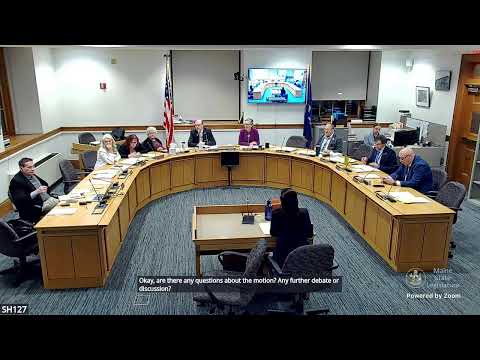
The Joint Standing Committee on Taxation held a work session on LD 2078 on Feb. 11, 2026, and voted to report the bill "ought to pass as amended." The sponsor amendment struck the bill’s original refundable credit and instead expanded the existing sales‑tax exemption to cover all residential electricity sales, with committee action adding an emergency preamble and setting an effective date of July 1, 2026.
Committee staff explained the amendment as an expansion of an existing exemption so that, beginning Jan. 1, 2027 under the base language, no residential kilowatt‑hours would be taxable. Staff (Jessica) said the amendment phases the change and adjusts existing statutory language so that existing low‑income exemptions remain in place until the broader exemption takes effect. Jessica summarized the change: "basically... strike and replace the proposed tax credit with an expansion of the existing sales tax exemption for the sale and delivery of residential electricity to cover all sales of residential electricity beginning 01/01/2027."
Fiscal estimates and timing: Sylvia Most of the Office of the Public Advocate told the committee an earlier MRS estimate from January 2025 put residential electricity sales‑tax collections at about $9,500,000 for 2025. MRS updated that figure during the meeting; Dr. Allen (MRS) told members the updated estimate is "more in the $6,000,000 a year range" on a full‑year basis and noted that net energy billing and other factors are already reducing collections. Dr. Allen also explained that implementation timing depends on the law’s enactment and administrative steps but that agencies normally prefer an effective date at the start of a month or quarter.
Committee action and rationale: Senators and representatives discussed effective dates and administrative feasibility for utilities and filers. Sen. Bickford proposed (and the committee adopted in the amendment) an emergency preamble and a July 1, 2026 effective date to provide prompt taxpayer relief while allowing some administrative lead time. The motion to report the bill "ought to pass as amended" was moved by Sen. Bickford and seconded by Rep. Dan Sayer. Chair Grohowski called the roll; those recorded in favor included Representatives Swallow, Quinn, Rudnicki, Matlack, Sayre, Freeman, White and Senators Grohowski and Bickford; the chair said the vote was unanimous of those present.
Impact and next steps: The committee’s action moves the amended bill out of taxation committee to the next steps of the legislative process. MRS and the public advocate provided preliminary fiscal estimates but members asked for continued coordination on implementation timing with utilities and filing agents to ensure the exemption can be operationalized by the chosen effective date.
Ending: the committee closed the work session after adopting the amendment and reporting LD 2078 "ought to pass as amended."