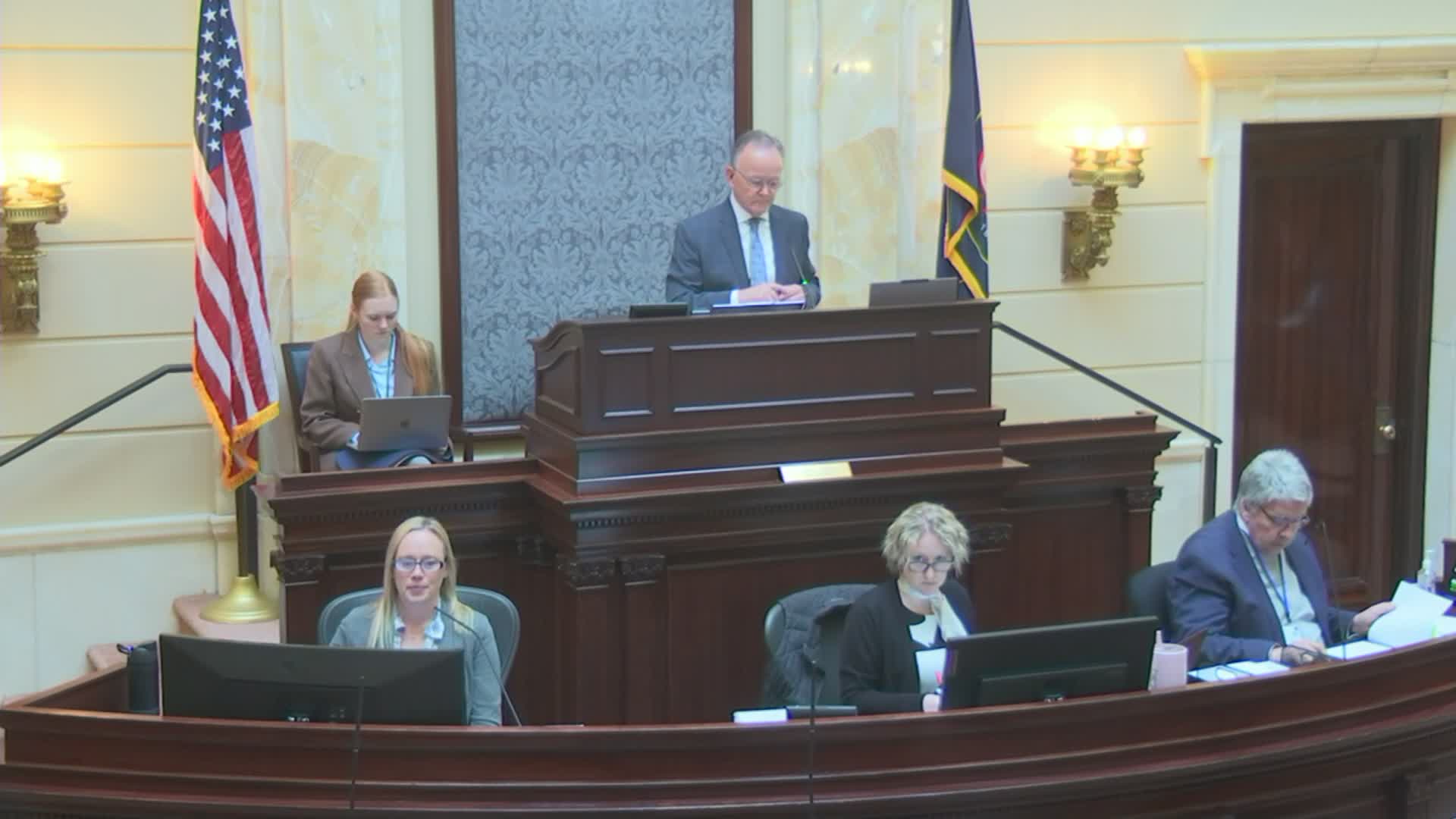
Utah Senate advances bill allowing 'natural organic reduction' with new disclosure and container rules
Loading...
Summary
After two hours of debate, the Senate substituted and advanced a bill to legalize 'natural organic reduction' (human composting) in funeral-director settings. Sponsors added a second substitute requiring markers and removable containers for soil placed on private property; the bill cleared second reading 16–10 and will move toward a third reading.
SALT LAKE CITY — The Utah Senate moved forward Monday with legislation that would allow 'natural organic reduction' — a form of human composting — to be performed in licensed funeral-home settings, prompting a heated floor debate about property disclosure and protections for future owners.
Senator Jen Plumb, sponsor of the measure, told colleagues the bill was drafted after constituent requests and consultations with burial-industry and emergency-health partners. "This is essentially a process that can happen, if you choose it, at the end of life," Plumb said, describing the procedure and noting public-health exclusions in the draft. She cited safeguards: "There has to be documentation as well as a certification, that there has not been a death from some of the more concerning illnesses like tuberculosis, prion diseases, or Ebola." (Sen. Plumb)
Plumb said the bill is intentionally limited to funeral-director settings and includes guardrails to prevent misuse. The sponsor added a second substitute on the floor to address disclosure concerns and to require a marker where soil is deposited on private property and that any soil be kept in a removable container so it can be relocated if a property changes hands.
Why it matters: The measure would add an option to Utah's end-of-life services and allow families who prefer a land-attached form of final disposition to avoid sending remains out of state. Supporters argued the bill simply codifies a choice that many Utahns already exercise by sending remains elsewhere, while opponents warned the measure could create problems for future property owners if markers/disclosure are inadequate.
Floor debate centered on disclosure and enforcement. Senator Wyler asked how a homeowner could be prevented from circumventing notice through a straw-man sale; he asked specifically what would stop a landowner from selling to an insider who removes a marker before selling to an unsuspecting buyer. "What would prevent a sham straw man sale like that from just completely circumventing everything you've put in the second sub?" Wyler asked. (Sen. Wyler)
Senator Plumb responded that the second substitute strengthens guardrails beyond current practice for burials and emphasized the intent that soil be in a removable container and that transfers include disclosure. "If there's more granularity needed to that description, I'm certainly open to that," she said. (Sen. Plumb)
Opponents, including Senator Weiler, said they worried about a buyer unknowingly purchasing property with remains in the yard and urged stronger public-record disclosure; Weiler said she had proposed a county-recorder filing in earlier drafts. Supporters, including Senator Cullimore, noted that current law allows burials on private property and the bill keeps operations to professional funeral settings.
Vote and next steps: The Senate substituted the first substitute with a second substitute on the floor and then advanced the second substitute by roll-call, 16–10 (3 absent). The chamber recorded that the measure "shall be read a third time," which advances it toward final floor consideration and sending to the House if passed.
What remains unresolved: Senators raised whether state law should require county-record notice on title records (a recorder filing) to make a private-property burial or soil deposition permanently discoverable; the sponsor said she would consider further language if the bill returns to the floor.