Get Full Government Meeting Transcripts, Videos, & Alerts Forever!
Get email alerts on the Medical Cannabis Policy topic
No spam. Unsubscribe anytime.
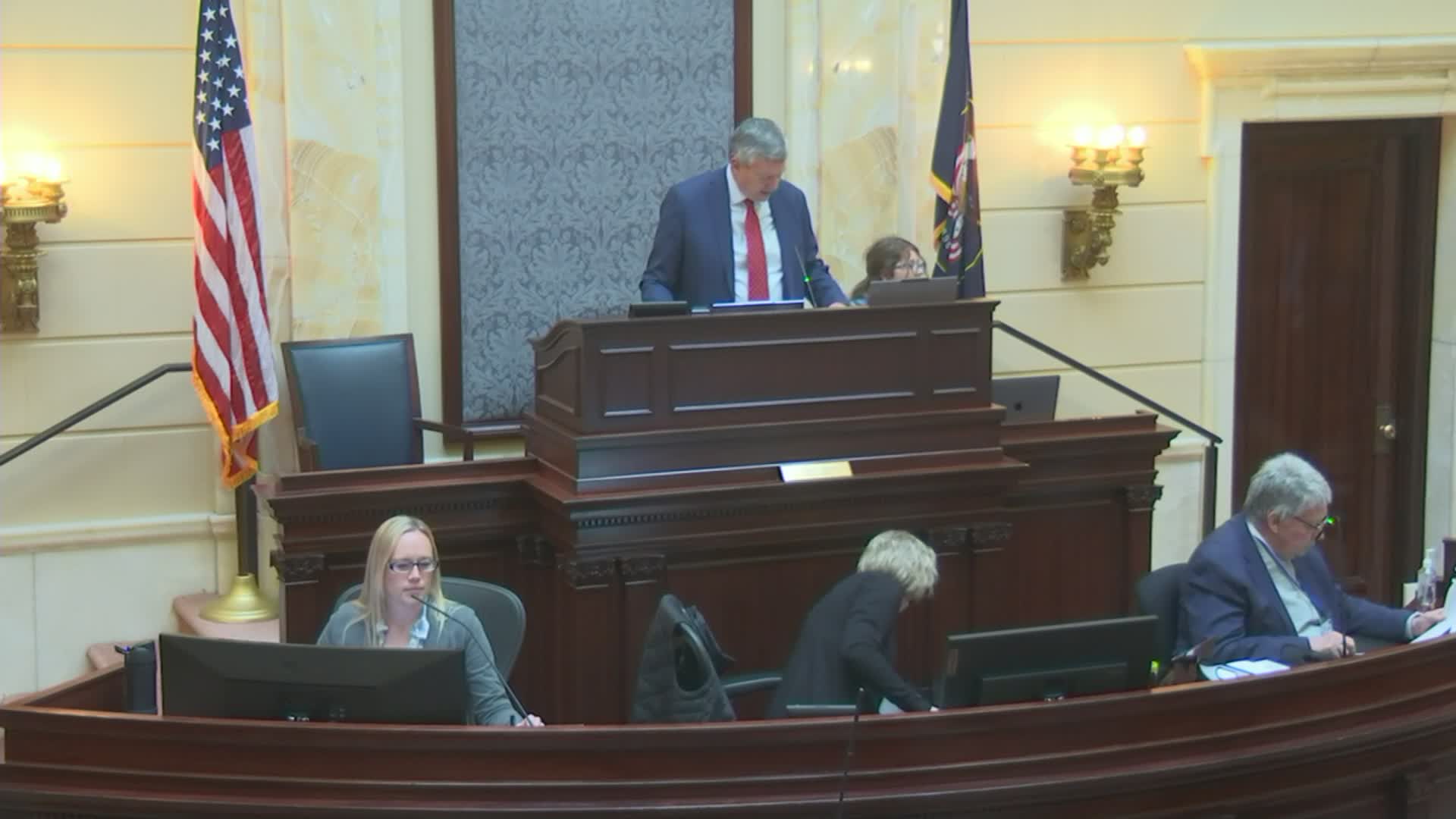
Senate adopts substitute for medical cannabis bill to ease requirements and create assistance option
Summary
The Senate approved a substituted S.B. 121 that removes a one‑hour DHHS education requirement, relaxes some transport and labeling mandates, allows caregiver attestations in lieu of background checks in specified cases, and establishes an RFP‑driven assistance program to help qualified low‑income patients pay for medical cannabis.
Senator Vickers presented a substituted S.B. 121 containing multiple changes intended to streamline and strengthen the state’s medical cannabis program.
The substitute makes several changes described by the sponsor: it removes a one‑hour DHHS education requirement that practitioners found to be onerous in practice; it eliminates a statutory requirement that products be transported in the original opaque pharmacy container at all times; it permits a caregiver’s attestation in certain cases rather than a mandatory background check; it sets up a process to create a program (run via RFP by a nonprofit) to help Medicaid, Medicare and low‑income patients pay for medical cannabis; and it adjusts licensing‑board timelines and grants additional rulemaking authority to the Utah Department of Agriculture and Food (UDAF) for certain quality‑assurance and remediation processes.
"These are things that we look at throughout the year… to make the program stronger and better," Senator Vickers said in describing the substitute. He also said the substitute clarifies labeling language (moving from a "back panel" to a "fact panel") and makes a few other technical changes related to pharmacist‑in‑charge designations and training.
Why it matters: The substitute would ease some compliance burdens on patients and caregivers, provide an avenue for affordability assistance for eligible patients, and give administrators additional rulemaking tools to address quality and labeling concerns. Interested stakeholders — patient advocates, providers, pharmacies and regulators — will likely monitor rulemaking and implementation details closely.
Next steps: The Senate approved the substitute and read the bill for a third time. The bill will move through the usual transmittal process; details of any assistance program and the implementing rules for UDAF will be developed in subsequent administrative rulemaking and contracting processes if the bill becomes law.