Get Full Government Meeting Transcripts, Videos, & Alerts Forever!
Get email alerts on the Impact Fees topic
No spam. Unsubscribe anytime.
Shenandoah adopts updated impact fees, approves related capital improvement amendments
Summary
Council adopted updated land-use assumptions and a capital improvements plan and passed Ordinance O-20019 to update water and wastewater impact fees, citing developer-funded infrastructure and a roughly $1,870,000 ten-year water project total and a roughly $10.4 million wastewater project driving fee changes.
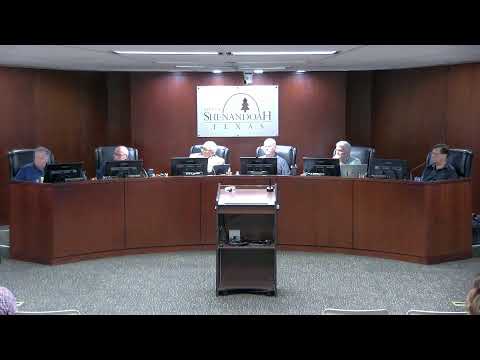
The Shenandoah City Council voted Oct. 22 to adopt amendments to the city’s land-use assumptions and capital improvements plan and to enact an ordinance updating water and wastewater impact fees.
Morgan Brown, the city project manager working with Blyle Engineering, presented the required five-year update under the Texas Local Government Code and walked council through changes to the city map (including the Tamina CCN area) and the capital projects that underpin the fee calculations. Brown said water-related projects in the 10-year plan total about $1,870,000 and identified a major wastewater treatment plant phase 2 project estimated at roughly $10.4 million as driving increases on the wastewater side.
Staff and the consultant explained that impact fees give the city authority to charge developers to connect to water and sewer facilities and that in some cases projects previously in the CFP were removed because they were funded by impact-fee revenue. Council moved to approve the land-use and CIP amendments and then voted to adopt Ordinance O-20019 amending the water and wastewater impact fees; members noted the utility fund is self-funding and that impact fees are intended to have new development pay its share of infrastructure costs rather than existing customers.
The ordinance and associated CIP amendments passed by voice vote. Staff said the next required update will be in 2030 under state law.