Get Full Government Meeting Transcripts, Videos, & Alerts Forever!
Get email alerts on the Public Safety topic
No spam. Unsubscribe anytime.
Albany officials unveil repeat‑offender initiative after public outcry over homicides
Summary
City officials presented a repeat‑offender pilot modeled on Atlanta’s approach after a public comment that 24 people were killed in Albany last year. The plan pairs focused enforcement with community interventions, court‑watch oversight and an interagency push; commissioners pressed for judicial and probation cooperation and outcome data.
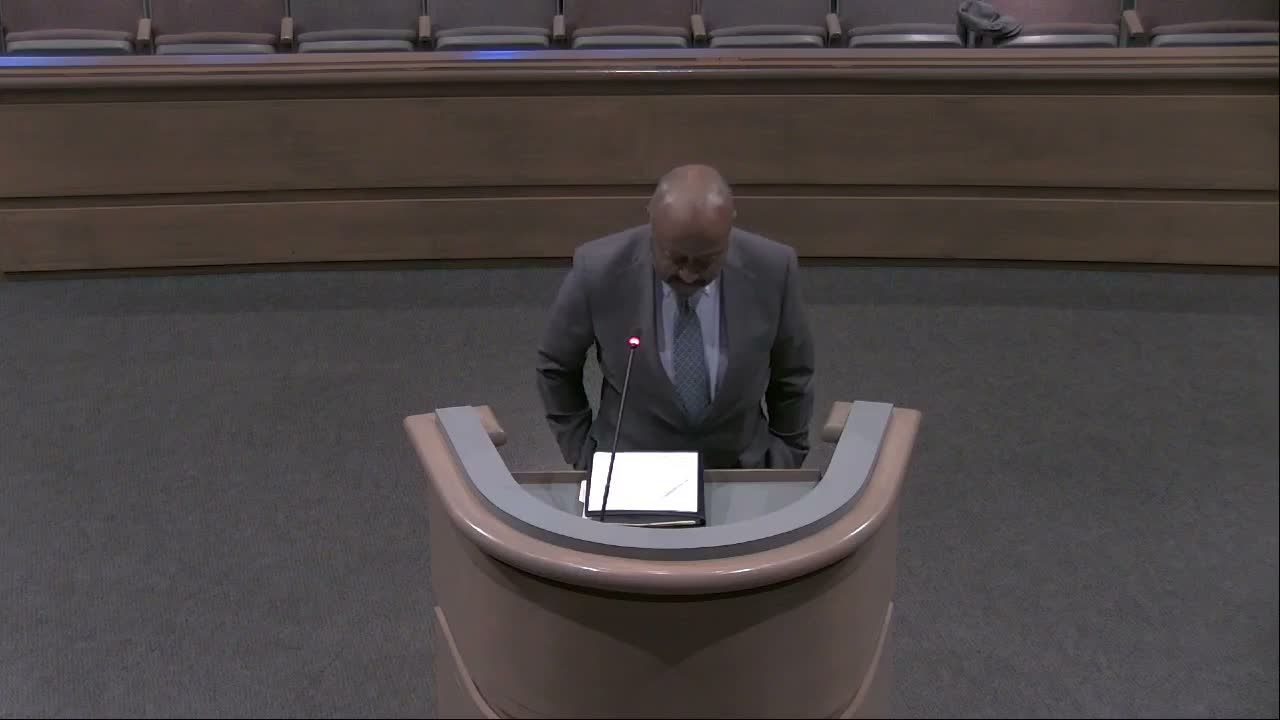
Reverend Henry Mathis opened public comment by calling on elected leaders to treat local homicides as an "epidemic," saying: "As of December 31, 24 precious lives have already been lost to homicide." His remarks set the tone for a lengthy public safety segment that followed.
Police leaders told the commission the city will pilot a repeat‑offender initiative adapted from Atlanta’s program to concentrate resources on a small set of people who account for a disproportionate share of violent crime. "The initiative is to identify, monitor, save lives and reduce gun violence," Captain Terrence Whitlock said in his presentation, describing a mix of tracking, enhanced prosecution, community‑based interventions and a court‑watch component. Whitlock said benchmarks for removal from the roster would include at least 366 days without a firearm incident and evidence of employment or enrollment in education or treatment programs.
Chief (identified in the presentation as the police chief) framed gun violence as a public‑health problem that requires both enforcement and prevention, and he said Albany had 23 homicide victims in 2025. He and Whitlock described court‑watch teams that would prepare documentation about a repeat‑offender’s history for judges and DA staff and retirees trained to observe courtroom practice and report on shortcomings in case preparation.
Commissioners pressed for specifics. Several asked how the program would work with the DA's office, probation, judges and regional partners and whether bond‑setting practices could be altered to keep the highest‑risk people off the streets. Commissioner discussion repeatedly returned to two gaps: witness intimidation and case preparation. Commissioner comments urged the city to secure commitments from the DA and the judiciary before relying exclusively on police‑led measures.
Mayor (named in materials as Mayor Bo Dura) and staff pledged to convene a broader public safety meeting that includes county, school and judicial leaders and to provide commissioners with data on prior arrests, dispositions and recidivism. Whitlock said the initiative would start showing early benchmarks (30/60/90 days) and that the city would track indicators such as reductions in firearm incidents, weapons recovered and changes in bond denials.
The commission did not take a formal vote on the program during the meeting; staff said they will return with a full presentation and invite judicial and county participation.
Next steps: staff will schedule a full public‑safety presentation with judicial, county and school leaders and provide commissioners with the arrest/disposition data requested.