Get Full Government Meeting Transcripts, Videos, & Alerts Forever!
Get email alerts on the Mosquito Control topic
No spam. Unsubscribe anytime.
Volusia County mosquito-control director explains surveillance, treatment thresholds and new drone use
Summary
Marcus McDonough, director of Volusia County Mosquito Control, described the program’s surveillance tools (sentinel chickens, landing-rate counts, mosquito fish), a 10-landings-per-minute treatment threshold, roughly 50,000 acres of salt marsh to manage, and the county’s move to drone treatments for hard-to-access areas.
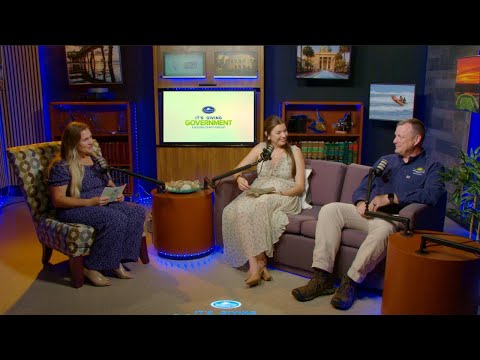
Marcus McDonough, director of Volusia County Mosquito Control, told hosts of the county’s "It's Giving Government" podcast that the program balances surveillance, targeted treatments and public education to reduce nuisance biting and limit mosquito-borne disease risk.
McDonough said the county uses several surveillance tools to detect both mosquito abundance and disease. "We have a small group called sentinel chickens," he said, explaining that staff draw blood weekly from chickens placed around the county to test for antibodies to West Nile virus, eastern equine encephalitis and St. Louis encephalitis. He added that the chickens serve as an early indicator and “they don't actually get sick from those diseases.”
The program also uses human-landing-rate surveillance and a numeric threshold to guide control decisions. "Ten is our treatment threshold," McDonough said, describing the practice of counting how many mosquitoes attempt to land during a one-minute period after an inspector stirs the area. When counts cross that threshold, staff consider control options.
Operational tools range from truck-mounted ULV foggers to contracted aerial applications and, increasingly, drones. On nighttime fogging, McDonough described the application as a very small dose "— the best visual is 1 ounce of a shot spread evenly over a football field" — and said aircraft are used when large or inaccessible marsh areas require coverage. “We have roughly 50,000 acres of salt marsh in the county that we have to help provide control on,” he said, noting salt-marsh species can travel long distances and produce large, aggressive outbreaks.
To limit environmental impact and pesticide resistance, McDonough said the county follows an integrated pest management approach that prioritizes larval control. "All of our larvicide products that we have are naturally derived," he said, citing soil bacteria and juvenile-hormone products that disrupt development rather than broad residual adulticides. For standing water, the program also places mosquito fish that eat larvae in roadside ditches and neglected pools.
McDonough described unmanned aircraft systems as a newer, more targeted tool: drones are intended for small or edge areas where helicopters or trucks are inefficient. "The helicopter's like the riding lawnmower, treating those areas; the drones are kind of like the trimmer," he said.
On safety concerns, McDonough urged residents to avoid direct contact during spray events and said crews will stop treatments if people are observed nearby. He said the dose applied in ULV fogging is small and that spraying at night reduces risk to foraging bees because hives are sheltered; crews also maintain and consult a beehive-location layer when planning operations.
McDonough emphasized that mosquito control is as much about public education and modest expectations as it is about spraying. He encouraged homeowners to remove standing water from containers, clean birdbaths weekly and use EPA‑approved repellents. "Success for us is doing the best that we can to respond to our customers," he said, adding that measurable reductions—such as cutting a trap count from 1,000 to 500—represent operational success even when mosquito numbers remain high.
Hosts said a follow-up "day in the life" episode will observe the program in the field. The interview and the county’s public resources are intended to help residents understand how and when control measures are applied.