
Vermont special-education leaders urge full Act 73 implementation, warn funding change could risk federal aid
Get AI-powered insights, summaries, and transcripts
Subscribe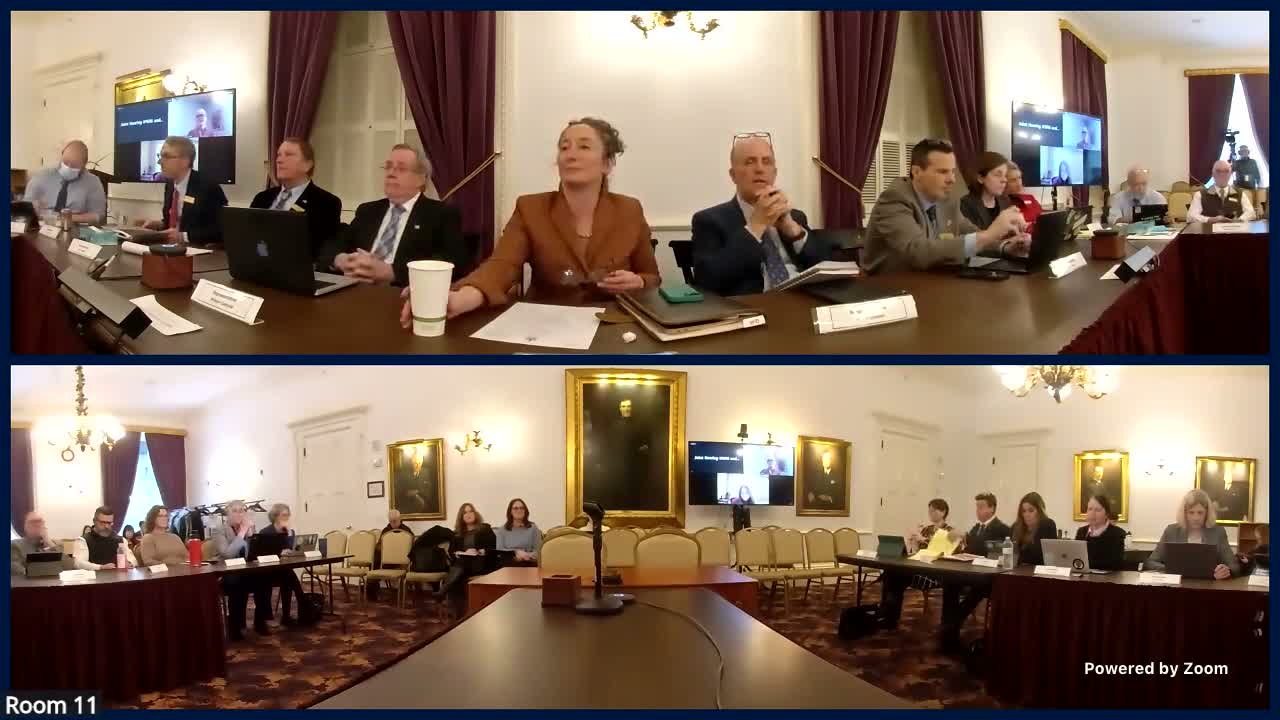
Summary
Vermont Council of Special Education Administrators told a joint House Education and Ways & Means hearing that the Agency of Education’s report did not fully answer Section 29 of Act 73, urged a clear multiyear implementation plan, and warned funding redesigns must protect federal maintenance-of-effort requirements.
BURLINGTON, Vt. — Leaders of the Vermont Council of Special Education Administrators told a joint House Education and Ways & Means hearing on Feb. 11 that the state must complete implementation of Act 73 and that proposed changes to how special education is funded must protect districts’ federal maintenance-of-effort (MOE) obligations.
“Special education from 2020 forward has risen 12% and total education expenses have risen 37% since then,” said Mary Lundeen, executive director of the Vermont Council of Special Education Administrators. Lundeen said those figures show special education has not driven total education cost growth and urged lawmakers not to cast students with disabilities as an affordability problem.
VCSEA witnesses said the Agency of Education’s recent report did not fully answer the questions laid out in Section 29 of Act 73 because the agency lacked the data and staff capacity to compile all required information. “Presenting data without meaning are just numbers,” Erin Maguire, director of equity and inclusion for Essex Westford School District and a past VCSEA president, told legislators. She urged the committee to center the voices of students with disabilities when shaping policy.
VCSEA’s president, Chris Fenway, spelled out the fiscal stakes: if districts fail to meet federal MOE requirements tied to IDEA Part B, “they risk having to pay back federal dollars with nonfederal monies,” which could leave some districts unable to operate. Fenway said any new funding design — whether census block grant, foundation formula or weighted model — must include guardrails to preserve MOE, avoid pitting special education against general education for dollars and keep local districts from risking federal funds.
VCSEA offered several legislative requests: a clear multiyear implementation plan from the Agency of Education (AOE) that includes coaching and consistent professional development; mandatory annual Act 173 implementation reports from supervisory unions and districts to verify fidelity to a multi-tiered system of supports (MTSS); stronger, content-specific leadership at the AOE (including elevating the special education director); and legislative boundaries so new mandates do not outpace field capacity.
Essex Westford was offered as a case study in implementation. In response to a question from Representative Davis about how the district managed to implement Act 73, witnesses described a sequence of policy and practice changes: moving to response-to-intervention approaches rather than discrepancy models for specific learning disabilities, adopting teacher coaching and professional learning communities, and establishing district accountability structures for progress monitoring. Those changes, speakers said, were accompanied by difficult local budget choices, including school consolidations and building repurposing.
VCSEA also stressed statewide variability: larger, urban districts in Chittenden County have more capacity than small, rural supervisory unions in the Northeast Kingdom, and a single model will not fit all districts. The witnesses urged the committee to adopt an implementation plan that allows districts to enter the work from different starting points while receiving consistent, state-supported coaching and monitoring.
Heather Freeman, VCSEA president-elect, summarized the group’s message: “Act 173 was and remains very impactful legislation. We have to finish what we started.” She said VCSEA will provide proposed bill language and additional data to the committee in the coming days.
The committee did not take votes at the Feb. 11 session; chairs asked members with additional questions to follow up with VCSEA representatives directly. Ways & Means signaled it will continue the work in a subsequent meeting.