Get Full Government Meeting Transcripts, Videos, & Alerts Forever!
Get email alerts on the Land Use Rezoning topic
No spam. Unsubscribe anytime.
Kokomo planning panel forwards contested plan to convert roughly 700 acres to high-intensity industrial
Summary
After more than two hours of public comment raising environmental, notice and tax concerns, the Kokomo City Planning Commission voted to forward a rezoning request that would allow high-intensity industrial uses on about 700 acres north of U.S. 31 to the Common Council for final action.
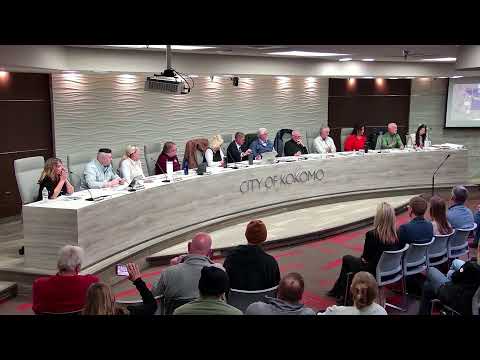
The Kokomo City Planning Commission voted Feb. 10 to forward a petition to rezone roughly 700 acres north of U.S. 31 to high-intensity industrial, after hours of presentations by petitioners and more than two hours of public comment urging delay or denial.
Petitioner representative Paul Wyman told the commission the rezoning is the next step in a 30-year strategy to create an industrial park that can attract large employers and follow up on earlier investments, including what he described as a $4,500,000,000 investment by Samsung and extensive utility upgrades. “When you put the whole package together … Kokomo is open for business,” Wyman said.
The request encompasses multiple parcels now zoned agricultural or rural residential; petitioners and counsel said the Indianapolis-based Indiana Economic Development Corporation (IEDC) has acquired multiple parcels and is participating to make the land more marketable to end users. Kyle Chambers, an attorney with Taft Law representing IEDC, said IEDC has no current business connection to prospective buyers and participated to bolster site marketability.
Opponents — dozens of residents who live near the proposed site — urged the commission to continue the matter until more information is available. Speakers cited short notice of certified mailings, potential displacement of long-time homeowners, threats to groundwater and the Wildcat Creek watershed, risks from increased truck traffic and light/noise pollution, and the possibility a data center could locate on the land. “Rezoning without a defined project is not reasonable or responsible planning,” said Joe Russo, who represented a coalition of residents asking for a continuance.
City officials repeatedly clarified the Planning Commission’s role is advisory: the commission’s recommendation will be certified and forwarded to the Kokomo Common Council, which will make the final decision and consider annexation, development plans and utility impacts if a project is proposed. “The role of the plan commission is advisory,” the city attorney said during the hearing.
Commissioners debated a motion to continue so the body could do additional due diligence. The continuance vote deadlocked in roll call and did not carry; the commission then proceeded to a recommendation vote. By roll call the commission issued a favorable recommendation to the Common Council, with five yes votes and three nays.
The vote was recorded as follows: Miss Barker — Aye; Miss Durham — Nay; Miss Dover — Nay; Mr. Graves — Aye; Miss Fowler — Aye; Mr. Bray — No; Mr. Grague — Aye; Mr. Pike — Aye. The commission’s favorable recommendation sends the rezoning petition to the Common Council for final action; annexation and any future development plans will be considered later and will trigger additional public hearings.
Petitioners emphasized the economic-development rationale: Laurie Dukes, president and CEO of the Greater Kokomo Economic Development Alliance, said the request “follows an established plan” to create shovel-ready industrial land and asked commissioners to forward a favorable recommendation so the Common Council can continue the process.
Opponents asked the council to require additional protections if the rezoning moves forward — from moratoria on particular uses (several residents asked for a data-center moratorium) to stronger environmental review and conditions on tax abatements. Several speakers also referenced ongoing state-level reviews of IEDC and asked that any perceived conflicts be resolved before the land’s zoning is changed; those reviews were described by residents as House Resolution 1511. The Commission did not add such conditions in its recommendation; it limited its action to the zoning recommendation that will be considered by the Common Council.
The rezoning recommendation now moves to the Kokomo Common Council, which will decide whether to accept annexation and adopt the zoning change; any specific project proposed for the land will be subject to separate public-review processes and development-plan approvals.
What happens next: the Common Council will schedule a hearing on annexation and zoning; if it approves annexation and zoning, developers would still need to submit development plans and secure permits, and those submittals would be subject to public review and environmental and utility analyses.