Get Full Government Meeting Transcripts, Videos, & Alerts Forever!
Get email alerts on the Noise Ordinance topic
No spam. Unsubscribe anytime.
Cleveland workshop reviews noise rules, enforcement limits and measurement challenges
Summary
At a Jan. 20 workshop, staff and public discussed possible amendments to Cleveland's noise ordinance, including time limits, decibel thresholds and how to address bass/low-frequency impacts that meters may not capture; police described practical enforcement steps and limits.
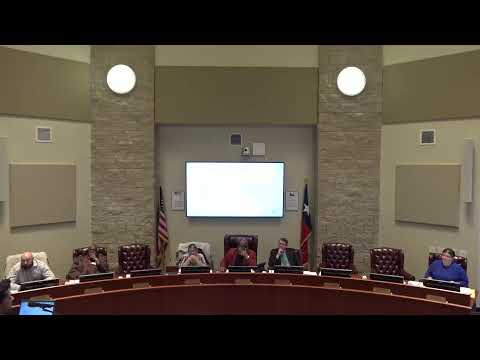
City staff and law enforcement outlined options for updating Cleveland’s noise ordinance at a Jan. 20 council workshop, focusing on whether to add time-based limits, objective decibel standards or event-permit rules to address recurring complaints about loud music and vehicle noise.
Unidentified Speaker 5, who led the presentation, said the city’s current code does not specify a time cutoff for amplified music: "Currently, in our current ordinance, no." The presenter reviewed three common approaches used by peer cities: subjective disturbance language, objective decibel thresholds with specified measurement distances, and special-event sound-permit systems.
The discussion was prompted by resident reports of loud music late at night on weekends. Unidentified Speaker 3 summarized constituent concerns: "Is there something about a cutoff time like 10PM or something where if the music is loud that they would need to turn it off?"
Police input focused on practical enforcement. Unidentified Speaker 7 said officers already enforce vehicle-amplified sound between 11 p.m. and 7 a.m. and rely on an audible-distance standard for moving vehicles: "If you could hear it from more than 50 feet away, that is chapter 50 verse 34 in the code of ordinance in the city of Cleveland currently is what we enforce." He added the department has calibrated decibel meters to support objective measurements but cautioned that low-frequency bass sometimes “may not register” and that ambient conditions (wind, background noise) complicate readings.
Staff noted trade-offs: a time-based rule (for example, a 7 a.m.–10 p.m. window used in neighboring jurisdictions) offers clear expectations but can fail to capture complaints by residents who sleep daytime shifts; objective decibel standards can enable clearer enforcement but require carefully drafted language to account for bass that affects neighbors without producing the same meter readings. Speaker 4 voiced a common fairness concern: an ordinance must consider residents who work nights and sleep during the day.
Council asked staff to draft ordinance options that show a decibel-based approach and a time-frame/permit approach side by side so residents can review and comment. The workshop produced no formal action; staff will return with draft language and comparative charts for further public feedback and potential future ordinance codification.