
Henrico extends Opportunity Schools another year, credits stipends and embedded supports for staffing stabilization
Get AI-powered insights, summaries, and transcripts
Sign Up Free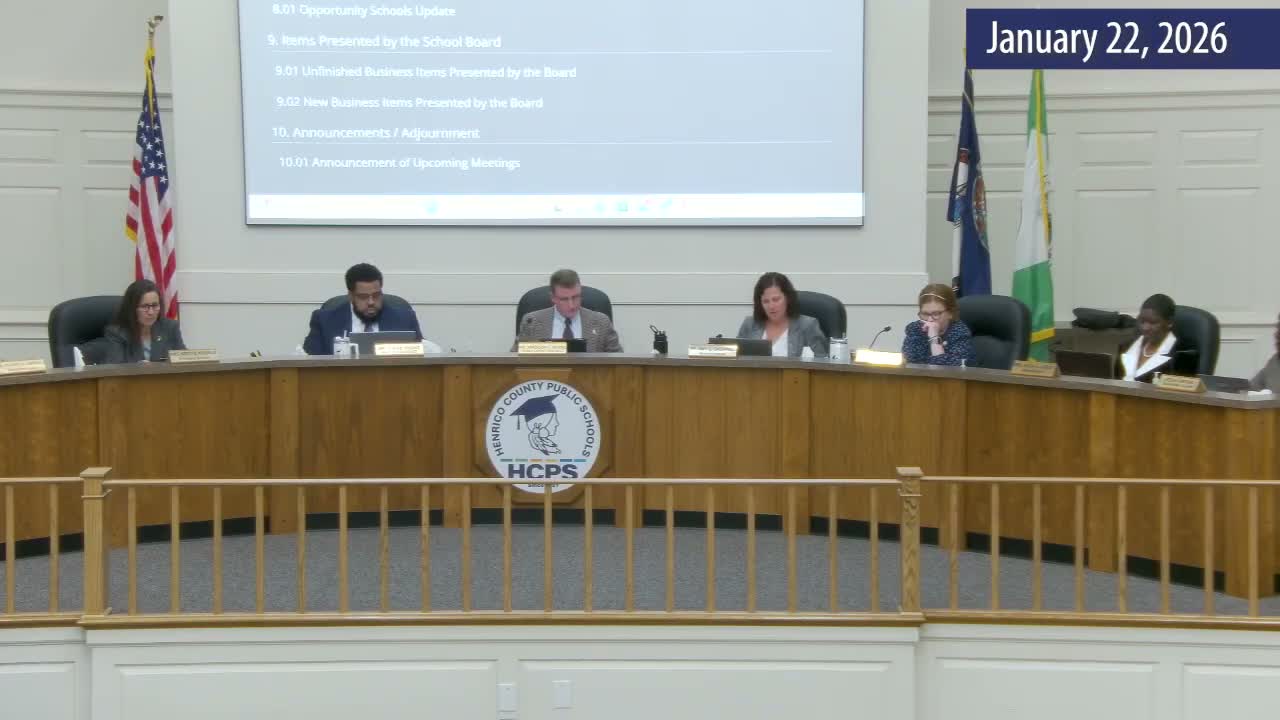
Summary
Henrico County Public Schools will extend the Opportunity Schools initiative for a fourth year as staff presented data showing reduced vacancy rates and described layered supports (annual stipends, teacher fellows, permanent substitutes and leadership supports) that staff and principals credit with stabilizing hard-to-staff schools.
Henrico County Public Schools staff presented a multi-year update on the Opportunity Schools initiative on Jan. 22 and recommended adding a fourth year of support for the original cohort while staff study transition options.
The presentation, led by Dr. Grant and a team that included Kenya Jackson and Anne Marie Seeley, traced vacancy and provisionally licensed-teacher trends during and after the pandemic and described a package of supports for Opportunity Schools: annual incentive supplements for licensed instructional staff, teacher fellows for coaching, permanent substitute positions to reduce daily coverage demands, additional associate principals at the secondary level and student-support interventionists at the elementary level. "Licensed instructional personnel were provided a 3,000 annual incentive supplement acknowledging the additional demands of teaching in these settings," the presentation said.
Staff outlined how the stipend has increased over time: $3,000 initially, then $3,300 and most recently $3,500, and noted cohort expansion with additional schools added since the initiative began. Division-wide vacancy rates declined from a high of 7% in 2022 to 4% in 2026; staff said Opportunity Schools contributed to stabilizing staffing in the hardest-to-staff locations while also stressing the importance of sustaining embedded supports.
Board members welcomed the update but raised questions about the program's transition plan. Mister Young cautioned against an abrupt "off ramp," saying, "I'm not so sure we should be off ramping ... I think we should stay the course," and asked for more analysis before supports are reduced. Several board members asked staff to return in early fall with a plan detailing how supports would be adjusted, whether supports should be tapered, and how to communicate potential transitions so employees have time to adjust.
What happens next: staff recommended one additional year for the current cohort, with a data review to guide any transition or expansion decisions and a follow-up report planned in the fall.