
Council splits on opioid-settlement uses as Family Court Project wins $250,000 appropriation; community corrections funding remains unresolved
Get AI-powered insights, summaries, and transcripts
Sign Up Free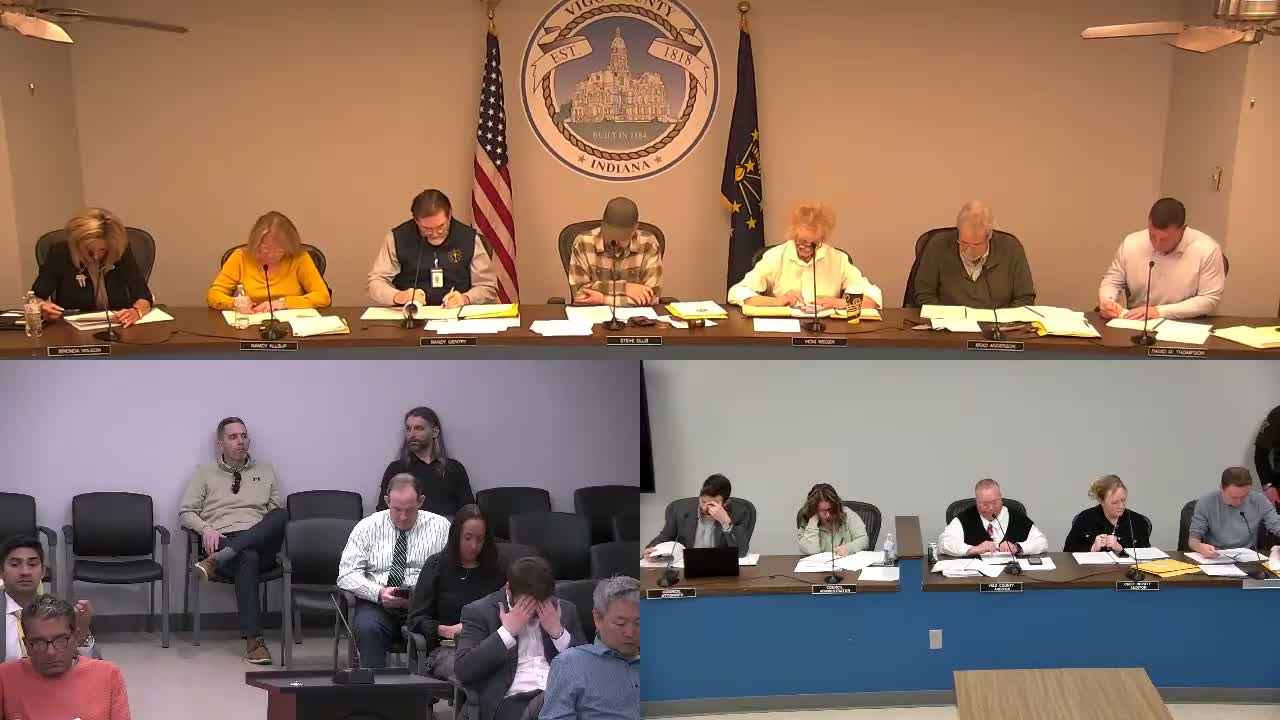
Summary
After an extended debate over restricted opioid-settlement dollars and county finances, Vigo County Council approved $250,000 for a Family Court Project but tabled other community corrections and salary requests pending further information and budget committee review.
The Vigo County Council spent more than an hour debating how to use opioid-settlement funds, weighing proposals to fund community corrections benefits, judges’ staffing requests and a Family Court Project focused on children’s mental health.
Judge Reddy (presentation to the council) urged approval of a $250,000 appropriation for the Family Court Project, arguing the program could reduce juvenile delinquency and future incarceration costs. "This project is seeking funding that amounts to around 2% of what we spend just to house criminals in jail," the presenter said, stressing the potential for prevention and long-term savings.
Council members split over whether restricted opioid funds may be used for staff benefits or insurance. Fiscal reports presented to the council showed restricted opioid cash balances (quoted in the meeting) and the challenges of balancing multiple petitions for limited settlement dollars. The auditor provided figures during the meeting, including restricted and unrestricted opioid balances as of Dec. 31, 2025 (restricted cited at approximately $870,966.32 and unrestricted about $218,712.42 in the discussion).
After repeated exchanges, the council voted on the Family Court Project appropriation for $250,000 from opioid funds. Roll-call voting recorded Brenda Wilson (Aye), David Thompson (Aye), Nancy Alsop (No), Brad Anderson (Aye), Randy Gentry (No), Vicky Wager (Aye) and Steve Ellis (Aye), producing a 5–2 approval.
Relatedly, the council discussed community corrections staffing and benefits requests, including multiple salary-ordinance items that the budget committee had tabled for more information. Council members and department representatives debated sustainability, the source fund for benefits (opioid-restricted vs. general funds), and operational impacts if community corrections could not remain open. Several related items were tabled for additional information or deferred to the March council meeting.
The meeting also included a proposal from a council member to appropriate $150,000 for an independent county financial review; that motion lacked a second and did not proceed. Speakers referenced existing work by Baker Tilly and State Board of Accounts procedures as alternatives to a separate forensic audit.
The council’s actions leave immediate funding for the Family Court Project in place while community corrections’ longer-term funding and salary ordinance questions remain under review by the budget committee.