
Superintendent outlines midyear goals, ThoughtExchange engagement and curriculum alignment
Get AI-powered insights, summaries, and transcripts
Subscribe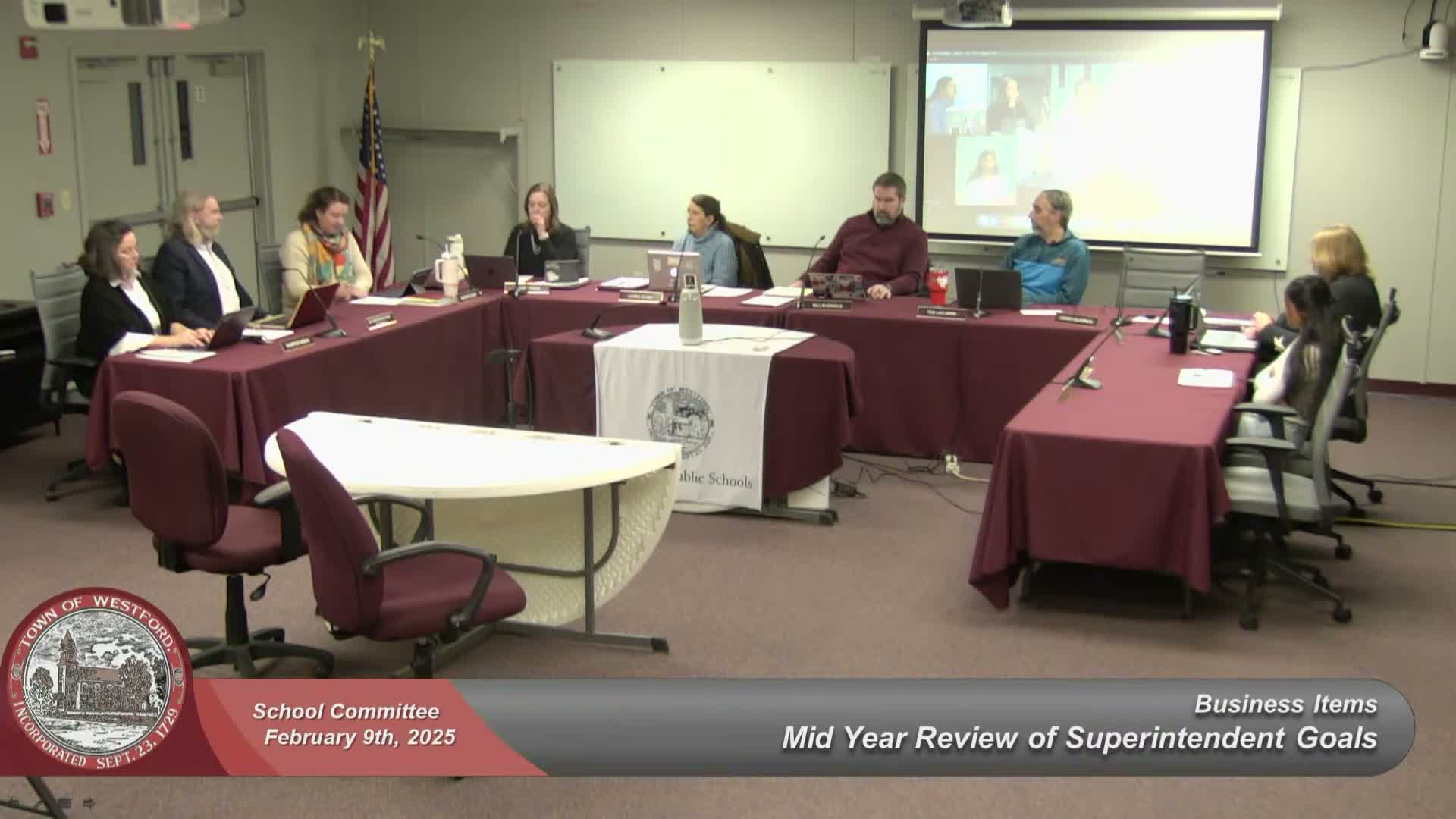
Summary
Superintendent Dr. Chu presented a midyear review of four goals — curriculum alignment, student belonging and Wayfinder rollout, report card communication, and a FY27–30 strategic plan — and described community engagement via ThoughtExchange and focused outreach such as community coffees and school events.
Dr. Chu presented a midyear update on the district’s superintendent goals, saying the evaluation subcommittee has refined the process to focus on targeted indicators rather than the entire rubric and will collect aligned evidence through the spring.
The four articulated goals are: 1) collaborative leadership and curriculum alignment — centralizing curriculum resources and convening monthly curriculum-coordinator meetings to assess vertical and horizontal alignment and equitable access; 2) student learning focused on sense of belonging and engagement — districtwide rollout of Wayfinder lessons with elementary and secondary professional development and expanded elementary PE/wellness (two classes per week) plus planned surveys; 3) report-card work — school-level working groups are evaluating how to present student progress to families across grade bands; and 4) a strategic district improvement plan (FY27–30) that the administration plans to present for committee approval after community input gathered through ThoughtExchange and public events.
Dr. Chu noted ThoughtExchange and related community events have surfaced technology usage as a recurring theme and said the district is designing the strategic plan with community feedback in mind. Committee members asked about concrete evidence to track progress against indicators; Dr. Chu said spring data collection will provide additional evidence and the subcommittee will synthesize results to inform year-end evaluation.
Committee members also discussed outreach tactics — community coffees at different times of day, visibility at town events, school tabling (e.g., neurodiversity celebration and parades), office hours, and a planned family survey to measure the committee’s engagement and communication impact. Members suggested offering a lunchtime option or pairing members for office hours and working with town partners to avoid survey fatigue while expanding reach beyond school families.
The discussion closed with agreement that the subcommittee’s work has made evaluation more manageable and a request for the administration to return with spring evidence and specific metrics tied to each goal.