Get Full Government Meeting Transcripts, Videos, & Alerts Forever!
Get email alerts on the School Device Policy topic
No spam. Unsubscribe anytime.
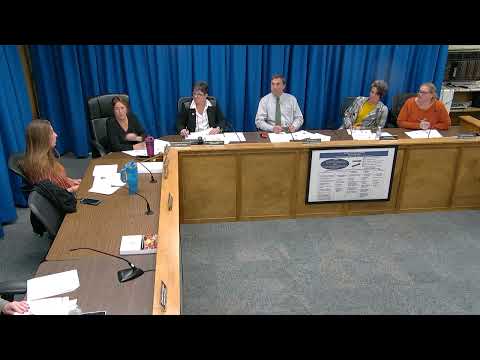
Auburn School Committee hears mixed survey results from no‑cell‑phone pilot, plans winter reassessment
Summary
Auburn Public Schools presented results from a one‑year pilot restricting student personal devices. Families and staff generally reported improved focus; many students said they felt less safe without phone access. The committee will re-survey in January/February before making policy changes.
The Auburn School Committee on Nov. 5 reviewed the first of three surveys from a one‑year pilot that restricts student personal device use during the school day at Swiss, Auburn Middle School (AMS) and Auburn High School (AHS). Superintendent (unnamed in the transcript) said families and staff reported improved focus but students expressed safety and communication concerns.
"For Auburn High School, if it says significantly improved or somewhat improved, that's about 63 percent," the Superintendent said, summarizing family responses. He told the committee that middle school and high school families most often cited "improved focus and attention and engagement" and "reduced distractions" as the main benefits.
Staff responses were broadly supportive: the Superintendent said high school staff reported that either "significantly or somewhat" the policy had improved student focus and classroom behavior, with 93 percent indicating improvement. "At the high school, 76% say it's been easy to support this in my classroom," he added, describing staff feedback.
The student survey painted a different picture. The Superintendent said students were more likely to oppose the policy and that a "vast majority" of students reported feeling less safe without immediate phone access. Students also flagged practical problems such as limited time to reach lockers and the difficulty of contacting parents, coaches or school staff during sports or emergencies.
Committee members and attendees discussed locker access and practical workarounds. One parent described using the main office to relay messages when needed; a member suggested limited access during lunch or passing periods. The Superintendent noted that some minor adjustments at the middle school — including brief windows for locker access — are being tested.
"I would be hesitant to make any changes just yet," the Superintendent told the committee, recommending the district share the PowerPoint with families and re‑survey in late January or early February to see whether tweaks to locker access and procedures change perceptions.
The committee did not take formal action on the cell‑phone policy at the meeting. Next steps include wider distribution of the survey results to families and a follow‑up survey after schools implement minor operational adjustments.