Get Full Government Meeting Transcripts, Videos, & Alerts Forever!
Get email alerts on the Circulator Signature Procedure topic
No spam. Unsubscribe anytime.
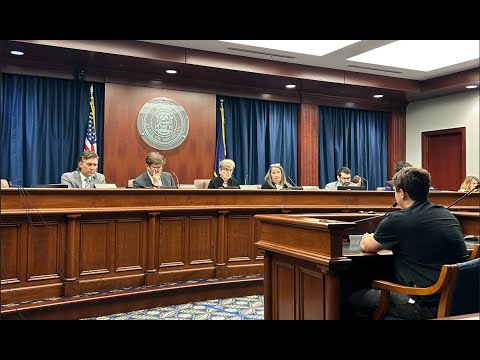
Michigan Board of Canvassers approves formal procedure to handle circulator-signature challenges
Summary
After extended debate about protecting valid voters and the scope of investigations, the board voted to adopt a Bureau of Elections procedure to handle challenges to petition circulator signatures, effective for petitions filed after the meeting.
The Michigan State Board of Canvassers voted to adopt a Bureau of Elections procedure for handling challenges to petition circulator signatures, a measure staff said is intended to provide clarity after contentious review processes in the 2024 cycle.
Director Brater introduced the document, saying staff had revised earlier drafts and “the goal is to have a process that everybody understands at the front end” so the bureau and the board can handle circulator challenges within the short petition-review window.
The procedure emphasizes predictability and contains a recommended best practice that petition sponsors provide exemplar signatures — particularly when circulators are not registered Michigan voters or reside out of state — so staff can authenticate circulator signatures quickly. Adam, a bureau staffer who summarized edits, said the exemplar recommendation was the principal substantive change.
Public commenters and board members debated the measure’s scope. Mark Brewer, who identified himself as speaking in a personal capacity, urged the board to apply the same standards to ballot-proposal petitions and warned the board to plan for "pattern-and-practice" challenges alleging widespread forgery. Brewer said the board "does not have discretion to refuse to investigate or to ignore evidence." Eric Doster of Good Government urged caution, saying the board should not adopt a special ‘‘carve out’’ that could lead to disenfranchisement and argued the Court of Appeals had not required a separate circulator-signature procedure.
Board members pressed staff and counsel on how the Holiday decision affects timing. Staff and counsel said Holiday requires the board to investigate circulator-signature allegations but does not necessarily require every investigation be completed before the ballot-certification deadline. Staff stressed that, for ballot-access determinations, the board relies on the certified sample when determining sufficiency; signatures outside the sample can still prompt criminal referrals or separate investigations. Director Brater said staff’s intent with the procedure is "to narrow down the instances" that force difficult, time-consuming choices for the board and to give campaigns and challengers clear expectations.
Members also argued over what counts as an appropriate exemplar for comparing signatures. Some board members said an official source such as the qualified voter file (QVF), a driver’s license, or a W-4 should be used when available; others warned that allowing comparisons to old petition signatures could invite subjective challenges. Staff said challengers must supply evidence to justify a comparison and that, where meritorious, the bureau would seek official exemplars from petition sponsors before recommending disqualification.
A board member moved that the board approve the procedure, direct staff to use the methodology for petitions submitted after the meeting, and authorize staff to make nonsubjective clarifications without further board approval. The motion, presented by a board member during the meeting, read in full: “I move that the board of state canvassers approve the procedure for investigating challenges regarding circulator signatures. Further, I move that the board direct staff to use the methodology and standards described in the procedure for circulator's signature challenges document when processing challenges to circulator signatures effective for petitions submitted after today. Furthermore, I move that the board authorize staff to make nonsubjective clarifications to this procedure without additional board approval.”
The motion passed by voice vote after several members said "Aye." Chair Hauskamp recorded opposition, saying, "I'm still gonna oppose it," but the motion carried and staff said the procedure would be effective for petitions submitted after the meeting.
Staff emphasized the procedure does not foreclose criminal referral. Director Brater noted that if investigations identify potential criminal conduct, the bureau can refer matters to the attorney general’s office even after certification. The procedure also aims to place responsibility on campaigns and ballot-question committees to retain exemplar signatures for circulators they hire.
The board concluded the discussion by asking staff and legal counsel to continue refinement and to present any clarifying language, while reiterating concerns from several members that the best protection for voters is a high threshold for disqualification and more legislative tools may be needed.
The procedure takes effect for petitions filed after the meeting; the board did not rescind existing sample-based sufficiency rules and staff indicated they will continue to use the QVF and other official sources when available to validate signatures.