Get Full Government Meeting Transcripts, Videos, & Alerts Forever!
Get email alerts on the Petition Form And Counts topic
No spam. Unsubscribe anytime.
Canvassers deny dozens of petitions, citing technical defects and insufficient valid signatures
Summary
During a marathon session, staff and the board found multiple nominating petitions insufficient — frequently for missing district numbers, wrong header information (PO box vs. street address), or insufficient validated signatures after challenges and face review. A handful of denials were based on facial defects rather than fraud findings.
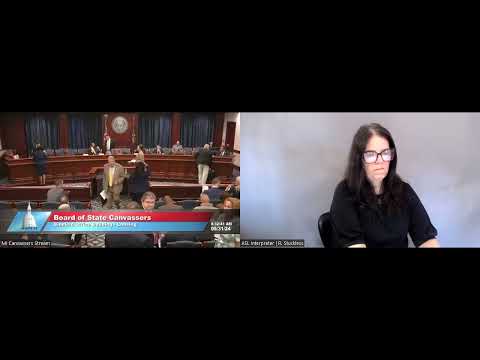
The Board of State Canvassers resolved dozens of individual petitions during its May 24 session, denying a number of candidates for failure to meet statutory form or signature‑count requirements.
Staff told the board that routine face review, followed by processing of filed challenges, left several candidates short of the valid-signature thresholds required for their offices. The most common causes were: (1) header or heading errors — for example, using a PO box where statute and court interpretation require a street address; (2) missing district numbers or incorrect office titles; and (3) signatures rejected as not registered in the jurisdiction listed or as invalid on matching to the qualified voter file.
Examples recorded in the hearing transcript included a U.S. Senate petitioner whose sheets were rejected because the header used a PO box instead of a street address, and several local candidates whose petitions were judged insufficient after counting of invalid and duplicate signatures reduced their valid totals below the statutory minimum. In some cases candidates submitted affidavits or supplemental materials during the hearing window; staff rechecked supplied records but frequently concluded the new materials did not change the outcome.
The board followed a strict-compliance approach in many rulings: staff cited statutory language and prior case law when recommending denial for technical defects. Candidates and counsel who disagreed were advised of judicial remedies; several petitioners indicated they would consider court challenges.
Board practice note: staff said it scans and performs face review of every non-senate petition; the bureau also encouraged candidates to use pre-submission checks and to consult the bureau’s published petition manual to avoid avoidable technical errors. Staff also said that while random sampling is used for very large statewide petitions, it does not eliminate the bureau’s obligation to refer suspicious sheets for further investigation.
What’s next: Candidates denied access to the ballot may seek judicial review; the board scheduled follow-up hearings on complex, high-volume challenges that require more staff time to adjudicate.