Get Full Government Meeting Transcripts, Videos, & Alerts Forever!
Get email alerts on the Nominating Petitions topic
No spam. Unsubscribe anytime.
State canvassers certify most petitions despite heated fraud allegations and questions over sampling
Summary
The Michigan Board of State Canvassers accepted staff recommendations to certify a consolidated list of candidates for the Aug. 6 ballot while facing contested challenges alleging circulator fraud in GOP Senate petitions; staff defended the use of random sampling, and the board directed further referrals and additional staff review on specific cases.
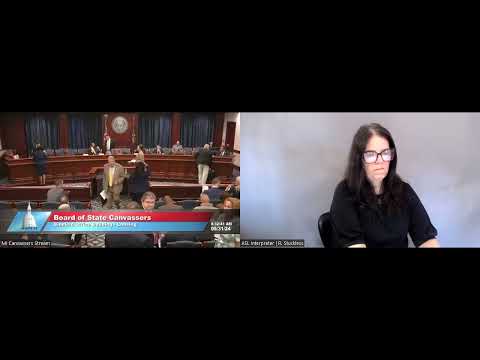
The Michigan Board of State Canvassers accepted a staff recommendation to certify the bulk of nominating petitions for the Aug. 6 primary on May 24, while opponents warned of coordinated circulator fraud and urged deeper review of GOP U.S. Senate petitions.
Director Breeder of the Michigan Bureau of Elections told the board that staff had adopted a 750-signature random sampling method for statewide U.S. Senate petitions to produce reliable projections of overall validity without reviewing tens of thousands of lines manually. Breeder said the sampling approach freed staff to examine many other petitions and to flag and refer suspicious submissions for possible law-enforcement investigation after the canvas is complete.
Opponents including counsel for challengers presented affidavits and other evidence they said showed patterns of forgery and “rainbowing” (duplicate or round‑tabling of the same signer across sheets). Chris Trubilgock of Clark Hill summarized sworn statements and requested a board-directed investigation of circulators who appear on multiple campaigns’ petitions. "There are indications of forgery that track closely to what occurred in 2022," Trubilgock said.
Campaign counsel for defended candidates pushed back. Eric Doster, representing a Rogers campaign petition, called late letters and complaints “public relations stunts” and said staff’s random-sampling results showed large margins of valid signatures in several samples. "The sample shows the candidates had more than they needed," Doster said.
Board members pressed staff on whether sampling can detect cross‑campaign patterns and duplicates. Breeder said sampling catches invalid signatures for the purpose of determining ballot placement but does not replace a full investigatory review; staff said it would pursue referrals and examine sheets outside the sample where there were clear indications of fraud.
The board voted to accept a consolidated staff list of candidates found sufficient under staff review while preserving separate staff reports (28 candidates) that required individual consideration. The attorney general’s representative noted pending court litigation affecting a candidate on the list and advised that any resulting court order would be handled by the secretary of state.
Several individual petitions were heard during the meeting. In a vote the board found one petitioner’s sheets insufficient after staff applied strict compliance to heading and address requirements; in other cases staff recommended certification where the sample showed a broad cushion of valid signatures.
Where challengers produced late or voluminous evidence, the board and staff sometimes split on timeliness. Counsel for petitioners argued the Bureau’s line-by-line reports arrived late in the week and asked the board for additional time to submit rehabilitating affidavits and spreadsheets; staff said it had processed materials it received and that campaigns had statutory windows to respond. For at least one high‑volume Court of Appeals challenge, the board deferred a final decision to allow staff additional time to review the late‑filed rehabilitative materials.
What’s next: The board recessed and scheduled continuation of remaining contested items for a later date; staff said it will refer suspicious circulator sheets for investigation and continue processing petition challenges and rehabilitating evidence before returning to the board. The secretary of state’s office will apply any court orders that arise from litigation filed after the hearing.