
Knox County panel previews ordinance to move juvenile detention oversight to juvenile court judge
Get AI-powered insights, summaries, and transcripts
Subscribe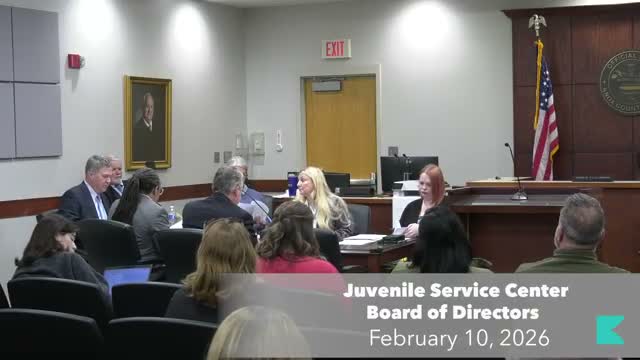
Summary
Board members reviewed an ordinance that would transfer operational control of the juvenile detention facility to the juvenile court judge, create a seven‑member advisory board, and dissolve the current board if the commission approves the measure in March; a motion to change how the commissioner‑appointed seat would be selected died for lack of a second.
Members of the juvenile detention oversight board on Feb. 5 got a first look at an ordinance that would transfer operational oversight to the juvenile court judge and create a new seven‑member advisory board to provide oversight and communication.
The ordinance, which the board said will go to the county commission for a first reading in February and a second reading in March, would replace earlier ordinances and move governance and operations under the juvenile court judge effective April 1 if the commission approves it. Speaker 1 said the change would dissolve the current board and that the new advisory board would meet quarterly and be publicly noticed.
Under the proposed advisory board structure, Speaker 1 described seven seats: two appointees by the Knox County mayor; one representative from the Knox County Health Department; one county commissioner appointee; and four subject‑expert seats (mental health, juvenile social services, juvenile legal expertise, and a non‑employee Knox County citizen). Most terms would be three years, while the mayoral and commissioner appointee terms would be two years.
The board debated one specific appointment detail: whether the commissioner seat should be appointed by the commission chair or by the full commission. Speaker 6 and others argued for full‑commission appointment given the position’s importance. Speaker 1 noted altering that language would require a formal motion. The record shows a motion to change the language — recorded as "Motion by Lee" — but Speaker 1 said the motion "dies for lack of a second." The motion therefore did not alter the draft ordinance.
The board was asked to recruit and submit candidates for the advisory board’s open seats to the March 17 meeting; Speaker 1 said the juvenile court judge may also submit candidates. Speaker 1 also said the board will prepare bylaws for the advisory body, using an audit‑department template adapted from existing planning commission bylaws.
The next procedural steps, as stated in the meeting: county commission first reading in February, second reading in March, and — if approved in March — an effective date of April 1 at which point the current board would be dissolved.