Get Full Government Meeting Transcripts, Videos, & Alerts Forever!
Get email alerts on the Technology topic
No spam. Unsubscribe anytime.
Service committee advances $463,000 utility billing software purchase; year‑one cost cited at $589,000
Summary
The Service Committee advanced Resolution 26‑02 to replace the city's utility billing system with a cloud-based vendor (recommended 'Scribe Point' in the transcript), reporting about $463,000 in implementation costs and an annual service fee of roughly $126,000; committee members requested further detail on data-security and breach-response responsibilities before final contracting.
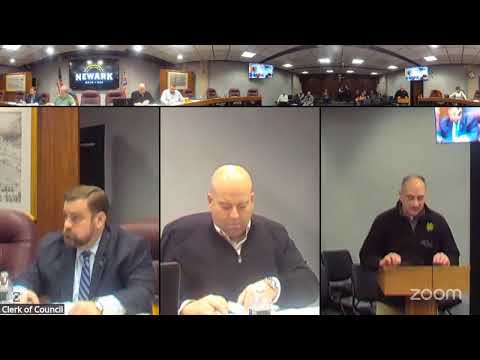
The Newark City Council Service Committee on Jan. 20 voted 5–0 to advance Resolution 26‑02, authorizing the city to pursue contracting and appropriations for a replacement utility billing system that staff said would modernize billing, backflow prevention tracking and customer notifications.
Staff told the committee the current utility billing software — implemented in 2006 and maintained on an AlphaLink server — is being sunset by its vendor (Tyler) in 2027. The city issued an RFP, received 11 submissions, shortlisted to two finalists and recommended a cloud‑based vendor recorded in the transcript as "Scribe Point" (transcript contains variants "Sprite Point" and "Scribe Point"). The presenter said Scribe Point has an office in Pittsburgh and that vendor personnel will provide on-site and remote support during implementation.
Key functions described include automated links to the city's New World financial system for daily deposits, a backflow prevention module to manage roughly 2,500 devices, mobile service-order generation for field crews, expanded customer payment options (including PayPal and Venmo), and GIS‑based targeted customer notifications for outages or construction.
Staff estimated an upfront implementation cost of about $463,000 and an annual service fee of about $126,000; a committee member clarified that total year‑one costs (implementation plus service fee) were stated as $589,000. Staff said payments are planned as milestone-based disbursements under a master services agreement. Presenter also noted vendor annual fees among proposers ranged from about $52,000 to $220,000 and that vendor implementation bids ranged from roughly $46,000 to $1.7 million.
Committee members pressed on cybersecurity and breach response. The presenter said the vendor represented that security needs were met and that city IT would establish secure IP connections, but acknowledged the committee had not drilled into a detailed breach-response plan; members requested the city include security and breach-responsibility terms as part of contract negotiations.
A motion to advance Resolution 26‑02 to the full council passed 5–0. The committee noted the implementation timeline is approximately 12–13 months, with a planned start in May and full implementation expected in early 2027.