Get Full Government Meeting Transcripts, Videos, & Alerts Forever!
Get email alerts on the Municipal Finance topic
No spam. Unsubscribe anytime.
Council weighs cemetery endowment options; staff to return with repayment and sell-back details
Summary
City staff and Zions Public Finance presented a cemetery perpetual-care study showing several fee scenarios. Council favored a plan that repays past general-fund and parks capital contributions while raising plot and opening/closing fees to build an endowment for long-term maintenance.
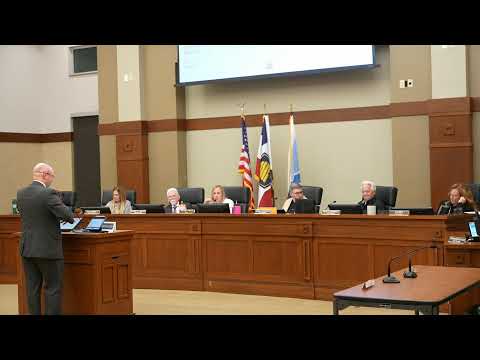
Highland City held a work session on Feb. 3 to review a cemetery perpetual-care study prepared with Zions Public Finance. The study modeled multiple scenarios to build an endowment intended to fund long-term cemetery maintenance and capital needs once plot sales decline.
Zions presented four scenarios. The staff-preferred Scenario 2 would repay general-fund and parks-capital contributions (spread over multiple years) and raise resident plot fees by about 18.5% initially with annual indexing thereafter; the model used a conservative 3% real-return assumption. The firm said achieving an endowment that generates the interest needed for long-term cemetery expenses would require a nominal endowment target of roughly $26.2 million by projection year 2075 (present value lower), though staff emphasized the number reflects long-term inflation and compounding assumptions.
Council discussed resident vs. nonresident pricing, the city policy that returned plots can be purchased back at present value, and whether the general fund should continue subsidizing a share of cemetery capital and operating costs. Staff confirmed current practice repays surplus in the cemetery fund to the general fund and that the cemetery fund balance is roughly $137,000 currently. Several councilmembers signaled support for Scenario 2 (repay costs while building corpus) and asked staff to refine the scenario, analyze sell-back rules, and produce an option that eliminates the general-fund operating subsidy per one councilmember’s suggestion.
Ending: Staff will return with refined scenario data, an analysis of sell-back wording and mechanics, and alternate modeling that shows Scenario 2 both with and without the continuing general-fund subsidy.