Get Full Government Meeting Transcripts, Videos, & Alerts Forever!
Get email alerts on the Data Center Moratorium topic
No spam. Unsubscribe anytime.
South Lyon council approves 12‑month moratorium on hyperscale data centers, retains developer‑petition clause
Summary
After extensive public comment urging stronger protections, the South Lyon City Council voted unanimously Feb. 9 to impose a 365‑day moratorium on new data‑center applications while staff and consultants draft updated zoning language and ordinances. The council also kept a provision allowing an aggrieved applicant to petition the council for expedited review.
The South Lyon City Council on Feb. 9 adopted a resolution placing a temporary moratorium on new applications and permits for data processing and hyperscale data centers for 365 days, citing concerns about electricity use, water demand and noise.
Interim City Manager Bakke presented the measure as a pause to allow staff and hired consultants to review the city code and prepare recommended zoning and ordinance changes. The resolution originally proposed a 180‑day pause; after debate the council withdrew that motion and adopted a 365‑day moratorium. Councilmember Popa moved the 12‑month extension; Councilmember Squires seconded the motion, and a roll‑call vote recorded all council members in favor.
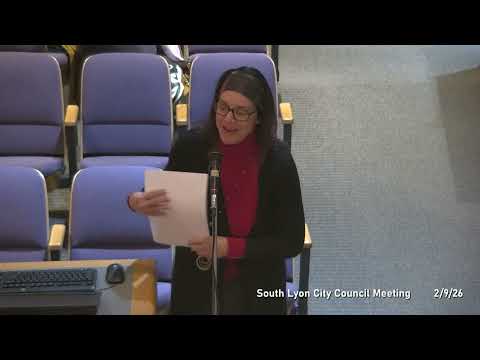
The moratorium drew extensive public comment during the meeting's public‑comment period. An attendee who identified themselves as Mac urged the council to “get rid of the styrofoam fence and please put up a concrete one,” arguing the draft resolution’s petition/hearing clause would allow well‑funded developers to seek quick relief and undercut the pause. Nicole Allen, a South Lyon resident, said the draft should be an ordinance or otherwise strengthened and recommended a 12‑month pause rather than 180 days. Joan Cottrell urged placing stronger language into zoning law so the city would have “a leg to stand on.” Robin Evanco questioned the long‑term value of building ground‑based data centers given trends toward orbital compute, and asked how soon local facilities might become obsolete.
The city attorney defended the hearing/petition language, saying the provision gives property owners who already have expended money and advanced planning an avenue to present their case to council and may reduce the city’s exposure to due‑process or takings claims. The attorney advised the clause provides the city with a documented process for such claims rather than leaving the city open to damage suits with no record of the affected party’s position.
Councilmembers debated the balance between protecting the city from litigation and avoiding loopholes; several members, including Kurzweil and Hanson, said a 12‑month period would give staff adequate time to research aquifer impacts, infrastructure constraints and sample ordinances from other Michigan communities. The council also directed staff to pursue zoning‑level solutions and to bring draft ordinance language to the planning commission for review.
What happens next: staff and consultants will review model ordinances and return recommendations to the planning commission (the agenda referenced an initial target of May 1 for recommendations under the original timeline). The moratorium includes a clause allowing council to extend it by an additional 180 days if needed; the council left that extension language in place when adopting the 365‑day moratorium.
Vote and formal action: the council adopted the resolution to impose the moratorium (final motion by Councilmember Popa; second by Councilmember Squires). The council then voted by roll call with all members recorded as voting “yes.”