Get Full Government Meeting Transcripts, Videos, & Alerts Forever!
Get email alerts on the Food Trucks topic
No spam. Unsubscribe anytime.
Lafayette Council directs staff to probe food-truck permits and tax compliance amid downtown complaints
Summary
After a Chamber request and extended public comment from downtown restaurant owners and food‑truck operators, the Lafayette City Council asked staff to verify county food‑safety permits, check sales‑tax reporting with CDTFA, and research regulatory models used by nearby cities.
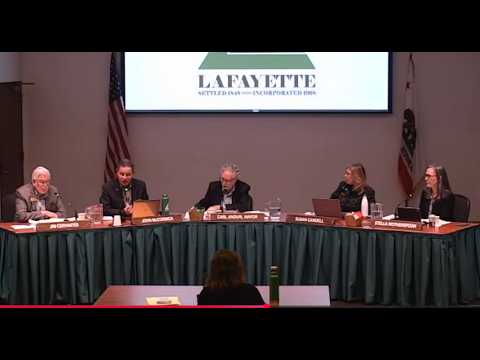
Lafayette, Calif. — The City Council on Tuesday opened a broad review of food‑truck activity in downtown Lafayette after a series of public complaints from brick‑and‑mortar restaurant owners and mixed testimony from truck operators and patrons.
Heather Ward, the city’s management analyst, told the council that staff’s inventory found three trucks operating regularly in the commercial district — Spicy Burrito, La Bikina and Hummus Bodega — and that Contra Costa Health told city staff on Feb. 3 that none of the three had an active 2026 mobile‑food permit. The city’s code‑enforcement team filed environmental‑health complaint reports the same day.
The debate centered on three immediate issues: public‑health permitting, the effect on downtown restaurants’ sales and whether Lafayette can or should regulate where and when mobile vendors operate. Restaurant owners at the meeting said trucks parked near Trader Joe’s and Diablo Foods have drawn away lunch customers. “My sales have dropped about 30 to 35%,” said Sonia Nawabi, who identified herself as the owner of 360 Gourmet Burritos and Oasis Cafe. "I solely depend on the lunch rush."
Countering that view, food‑truck operators and some residents said the vendors attract visitors and provide low‑cost options that broaden the downtown’s appeal. Gia Esquivel, owner/manager of La Bikina, said her crew pays meters, cleans up and tries not to obstruct sidewalks. Supporters pointed out that Hummus Bodega provides one of the only kosher hot‑food options in the area, drawing patrons from across the Bay Area.
Councilmembers pressed staff on enforcement roles and tax reporting. Ward said public‑health enforcement falls to Contra Costa Health and that the county had reported the lack of 2026 permits; she also said the city can seek limited seller‑permit information from the California Department of Tax and Fee Administration (CDTFA) through a formal authorization process, but state law limits local access to sales‑return or audit data.
The council did not adopt an immediate ordinance. Instead, members directed staff to: verify the county’s permit enforcement status and continue follow‑up on the complaints; provide food‑truck operators with CDTFA guidance and pursue options to confirm that vendors who spend substantial time in Lafayette report sales tax to the city; compile a concise list of local rules and best practices (meter feeding, sidewalk clearance, garbage control) for downtown vendors; and report back with examples from neighboring cities — notably Moraga, Orinda, Concord and Martinez — and the legal analysis of the city attorney.
Mayor Anduri framed the approach as ensuring a level playing field: “We want to make sure these businesses that are spending this much time in our community are paying their sales tax here,” the mayor said. The council did not set a timeline for the staff follow‑up but asked for a more detailed staff report to return to a future meeting.
The discussion followed a staff summary that included two tickets issued (and paid) to one truck for unpaid parking meters and multiple code‑enforcement responses to trucks placing tables, chairs or signage in the public right of way. Ward said staff had not received complaints about noise or garbage originating from the trucks but acknowledged repeated violations of sidewalk‑encroachment rules had occurred and been repeatedly corrected.
Next steps: staff will check the status of county permit enforcement, consult CDTFA on seller‑permit information and return with legal options and examples of policies used by other Bay Area cities. The council emphasized fairness to brick‑and‑mortar businesses while also recognizing the economic and cultural benefits some residents say the trucks bring.