Get Full Government Meeting Transcripts, Videos, & Alerts Forever!
Get email alerts on the Police Drones topic
No spam. Unsubscribe anytime.
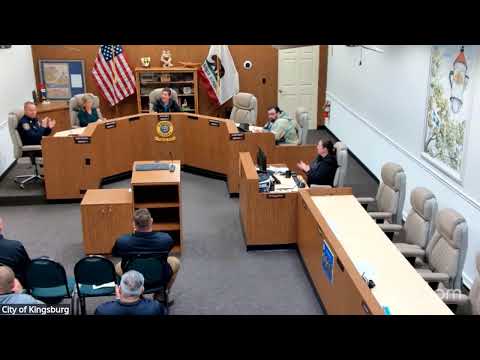
Kingsburg panel approves $4,000 for police indoor drone and portable power
Summary
The Kingsburg Public Safety Committee voted Feb. 10 to allocate up to $4,000 to buy an indoor drone and portable charging equipment for the police drone program; members also discussed training, FAA licensing and transparency tools for drone use.
The Kingsburg Public Safety Committee voted on Feb. 10 to spend up to $4,000 to purchase an indoor-capable drone and a portable power supply for the police drone program.
Officer (Speaker 3), the department’s drone program lead, told the committee the department already operates an outdoor Matrice 4 and is seeking a smaller first-person-view model (referred to in the meeting as the Avada 2) designed for indoor searches. The presenter described the inward-facing drone as lightweight, maneuverable and capable of short indoor flights to clear tight spaces before officers enter. He said the quoted prices in the presentation varied; the transcript records vendor estimates including $2,007.07 at one point, a $2,777 quote at another and the presenter later described the package as "about $3,000." Battery packs and accessory costs were discussed as separate expenses.
Committee members pressed for operational and training details. Officer (Speaker 3) said he is enrolled in FAA Part 107 training and expects to complete certification within a few months; once certified he plans to expand training so other officers can log practice hours under a licensed operator. He described policies under development — preflight inspections, operational flight plans and forms for consent/search warrants — and said the department is evaluating drone-management software that logs flights, maintenance, GPS routes and can provide transparency about when and why a drone was used.
Members discussed charging needs for extended deployments. The presenter explained options to charge via AC power, vehicle inverters or portable battery stations (he referenced the brand Jackery), and said agencies often bring multiple batteries to swap during events. The committee also discussed how many licensed operators the department will need, with the presenter estimating three to four pilots to maintain coverage.
Member (Speaker 2) moved to allocate up to $4,000 to cover the indoor drone and portable power supply; Chair (Speaker 1) seconded the motion. The committee voted by voice and the motion carried.
The committee’s next steps include completing the presenter’s FAA certification timeline, finalizing vendor quotes and the department completing required policy and training documentation prior to expanded operations.