Experimental study finds cranial fractures often start away from impact, challenging textbook assumptions
Loading...
Summary
Researchers described controlled cadaver-impact experiments showing fractures frequently initiate peripheral to impact sites and follow sequences different from textbook conventions, a finding the team says could reduce misidentification of impact points in forensic cases.
Unidentified Presenter outlined experimental results showing that commonly taught conventions about blunt cranial fractures do not always match controlled observations. Speaking at an anthropology session, the presenter said the team used a pneumatic impact system and human cadaver heads to test how implement, energy and repeated impacts affect fracture patterns.
"Fractures initiated somewhere other than the point of impact in 16 of our 24 single impact experiments," the presenter said, reporting that peripheral initiation occurred across all three implements and both energy levels tested. The experiments used three aluminum impactors approximating a hammer, a baseball bat and the broadside of a brick and two average energy inputs—103 joules and 181 joules.
The researchers filmed impacts at 10,000 frames per second and documented post-impact fractures with photography and standardized diagrams. They reported that fracture sequence frequently ran opposite textbook models: peripheral linear fractures appeared and traveled back toward the impact site before concentric fractures formed. "The fracture sequence in this impact experience experiment is almost entirely opposite from the sequence that we expect based on convention," the presenter said.
Those findings have practical implications for forensic investigations, the presenter said. Under conventional assumptions, intersecting linear fractures or roughly circular fracture patterns are often taken as evidence of separate impact sites. The team warned that operating under that assumption "could lead to misidentification or overestimation of impact sites," because linear fractures may intersect away from the true point of impact.
The study also found concentric fractures occurred inconsistently: at the base energy level they appeared at 8 of 12 known impact sites in single-impact tests, but were absent in 4 of 12. Concentric fractures were most consistent with hammer-like impacts and less frequent with bat- and brick-like impacts; sequential impacts produced more complex patterns that obscured concentric features.
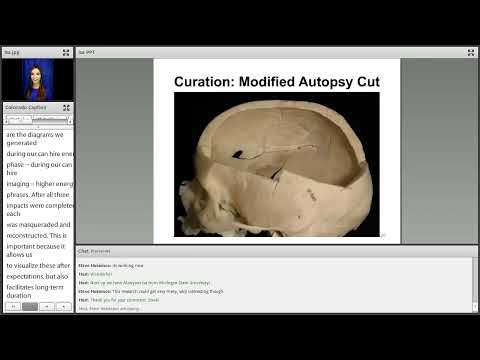
The researchers additionally reported that modified autopsy cuts and examination of endocranial fractures—internal plugs of displaced bone—helped confirm known impact sites in several specimens. The presenter said the work provides baseline data linking implement, energy, location and number of impacts to fracture patterns and a curated comparative collection for future case evaluation.
The presenter invited attendees to fuller presentations and the conference proceedings, noting additional detailed findings would be presented in anthropology sessions later in the program. The talk acknowledged funding from NIJ and the contribution of donors whose body donations made the experiments possible.