NIJ‑funded study finds rising MDMA positivity and frequent mismatch between festivalgoers’ reports and lab results
Loading...
Summary
A presenter summarized NIJ-funded 2014–2017 testing of electronic dance music festival attendees, reporting increases in MDMA detections, turnover among novel stimulants, and that many attendees misidentified what they had taken based on oral‑fluid confirmations.
A presenter described findings from a National Institute of Justice (NIJ)–funded study that tested oral fluid and other biological samples collected at electronic dance music festivals from 2014 through 2017 and found rising MDMA detections and frequent mismatches between attendee self-reports and laboratory confirmations.
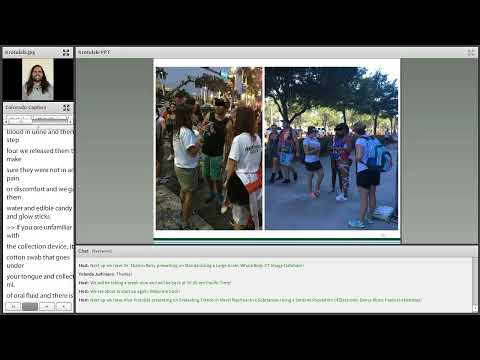
The presentation, introduced as an NIJ-funded research project, focused on novel psychoactive substances (NPS) with emphasis on novel stimulants. The presenter said the research team collected biological specimens and survey responses at festivals in Miami (annual collection across the study period), and at events in Tampa and Atlanta in 2017, and that the project was reviewed and approved by an institutional review board (IRB). The presenter described using standardized oral‑fluid collection (Quantasol) and a multi-platform laboratory approach for screening and confirmation, including LC‑QTof screening and GC‑MS confirmations.
Why it matters: festival-related acute drug harms have been documented in recent years; the presenter cited three deaths at the Hard Summer Music Festival in San Bernardino that were attributed in reports to acute MDMA toxicity and noted at least 29 festival-related drug deaths reported in news coverage since 2016. The study’s analytic results were presented as a complement to seizure data the presenter attributed to a DEA reporting platform they referenced during the talk.
Key findings reported by the presenter included temporal spikes in specific novel stimulants (methylone in 2014, ethylone in 2015), followed by an increase in MDMA and MDA positives across the period. The presenter said these laboratory trends aligned with the seizure data they cited. They also reported that positives increased as festivals progressed (higher detectability the day after use and greater oral‑cavity concentrations), and that geographic differences were generally small; one stimulant showed a Tampa spike but the presenter cautioned the Tampa sample size was small and may not represent a true local increase.
The presenter compared survey responses with analytic confirmation: among respondents they reported 25 who said “ecstasy,” 123 who said “Molly,” 55 who said “MDMA,” and 20 using mixed terms. The presenter said many participants who reported taking MDMA or Molly were not analytically positive for MDMA alone and instead tested negative or positive for novel stimulants. “Based on these survey responses, individuals are generally sort of unaware of what they’re taking,” the presenter said, concluding that festival attendees comprise a viable sentinel population to monitor emerging novel stimulants.
Methodological note: the presenter emphasized their focus on oral fluid for trend analysis because oral fluid was collected across all four years; they also said some crowd‑collected samples lacked accompanying survey data. The presenter explained a study decision to classify MDA positives together with MDMA positives because MDMA metabolizes to MDA.
Next steps and availability: the presenter said the study manuscript has been written up and submitted to the Journal of Analytical Toxicology for peer review. The presenter acknowledged NIJ funding and laboratory/instrumentation partners, including named staff and vendors.
The presenter invited questions at the end of the talk; no formal actions or votes were recorded in the presentation.