Get Full Government Meeting Transcripts, Videos, & Alerts Forever!
Get email alerts on the Public Comment topic
No spam. Unsubscribe anytime.
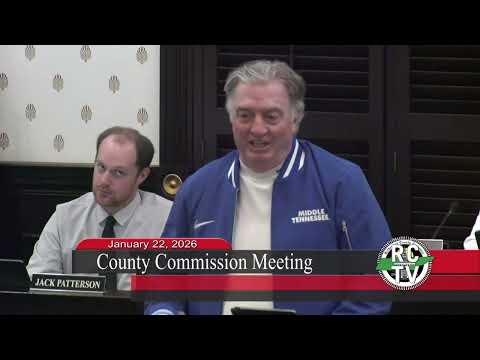
Resident tells Rutherford commissioners neighbor’s backyard slaughter business creates noise, odor and safety concerns
Summary
During public comment at the Jan. 22 county meeting, resident Nathan Payne described persistent odor, noise and animal-welfare concerns tied to a neighbor’s backyard poultry and slaughter activity and said Tennessee agriculture staff had inspected after he submitted photos; no county enforcement action was announced at the meeting.
Nathan Payne told the Rutherford County Commission that a newly arrived neighbor established what he described as a home slaughter operation and kept large numbers of birds and other animals on a residential lot, producing offensive odors and noise and creating a neighborhood nuisance.
"My neighbor started a slaughter business based on the unlimited number of animals allowed on your property and the 20,000 fowl slaughter limit," Payne said, describing repeated odor and fly problems that have disrupted outdoor family activities. He said adult ducks and ducklings had frozen and that animals on the neighbor’s lot lacked adequate shelter.
Payne said state agricultural staff visited twice after he supplied photographic evidence; he told the commission that code enforcement responded to complaints about people lining up at the property to buy animals but that the seller later shifted to deliveries. At the meeting no county official announced immediate enforcement action; DeMasi and later county staff focused on Plan Rutherford and the public-hearing agenda.
Payne’s account was part of the public-comment period; the commission did not take formal action on the specific complaint during this meeting. Residents who raise similar on-site animal operations typically are directed to appropriate county or state enforcement offices for investigation, and Payne said he had already contacted the Tennessee Department of Agriculture.
Why it matters: The complaint illustrates how county land-use and code standards — and their enforcement — can affect quality of life in established residential neighborhoods and why some speakers tied their concerns about neighborhood compatibility directly to the comprehensive-plan discussion that followed.
Next step: Payne's concerns, as stated on the record, are a complaint to be pursued through code enforcement or the Tennessee Department of Agriculture; the meeting record shows the matter was noted but not resolved at the Jan. 22 session.