
Texas Workforce Commission accepts staff recommendations on most docketed wage and UI cases; several pulled cases prompt dissent and rehearing requests
Get AI-powered insights, summaries, and transcripts
Subscribe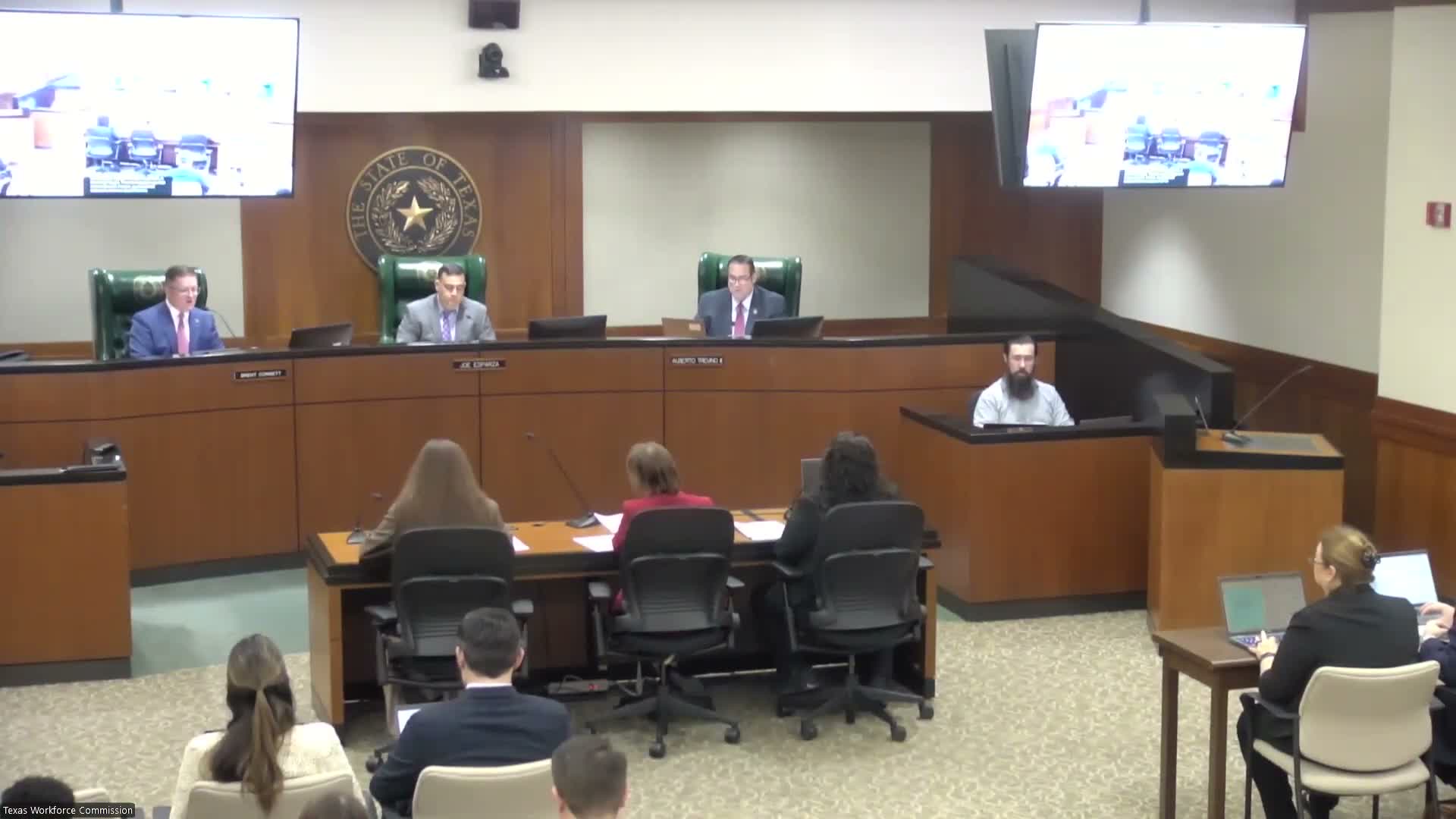
Summary
The commission voted to accept staff recommendations on remaining wage-claim and unemployment-insurance cases on docket 6, while individual pulled cases prompted split opinions, short-form dissents and rehearing or modification requests on issues including timeliness, fraud determinations, and alleged misconduct.
The Texas Workforce Commission voted to accept staff recommendations on the remaining wage-claim cases and the remaining unemployment-insurance cases on docket 6 during its meeting. Commissioners recorded exceptions and short-form dissents for several pulled cases and debated whether particular matters should be reheard, modified or affirmed.
On the wage-claim docket, a motion to accept staff recommendations passed with specified exceptions as reflected on the wage-claim short-form dissent list. Commissioners noted there were no tax liability or fair-housing cases on the docket and confirmed no child-labor or pulled wage-claim cases required further discussion beyond the short-form lists.
The commission reviewed multiple pulled unemployment-insurance cases by case number and debated standards of proof, timeliness and appropriate remedies. For case 3687023, one commissioner argued the employer failed to present testimony and recommended reversing the administrative-tribunal decision and finding no misconduct; other commissioners argued the claimant had prior warnings and supported affirming the AT decision for misconduct. For case 3766690, commissioners disagreed about whether employer testimony and a campus report established misconduct or whether sworn claimant testimony and hearsay limitations favored reversal or rehearing. In case 3772521, debate focused on whether commission delay and late notice justified deeming an appeal timely and reversing a fraud determination; some commissioners supported modification and recalculation of overpayment rather than full reversal to avoid unintended overpayment. Commissioners discussed that reversing a fraud determination outright could prevent the unemployment-insurance benefits unit from correctly recalculating benefits and accepted staff advice to modify overpayment calculations when appropriate.
Several commissioners asked that particular cases be resubmitted or reheard to allow employers to present firsthand testimony, and short-form dissents were entered when members disagreed with staff recommendations or the majority. After discussion, a motion to accept staff recommendations on the remaining UI cases passed with the exceptions noted on the UI short-form dissent list.
The record shows split findings and several directions to resubmit or rehear specific matters; where commissioners proposed rehearing or modification, no single uniform remedy was recorded for every pulled case in the public docket. The commission’s votes accepted staff recommendations as a default for remaining matters on the docket while preserving recorded dissents for specified cases.