Santa Barbara council adopts wide‑ranging single‑use materials ordinance, including Mylar balloon and polystyrene limits
Loading...
Summary
The City Council approved an update to local single‑use materials rules that expands polystyrene restrictions, sets compostability standards for disposable foodware, limits small single‑use water bottles in retail, bans Mylar balloons and plastic/mylar confetti at sale or distribution in the city, and phases in reusable foodware requirements with exemptions and assistance for businesses.
The Santa Barbara City Council on Feb. 10 approved a broad update to the city’s single‑use materials rules that staff said aims to reduce litter, protect waterways and expand reuse options for food service.
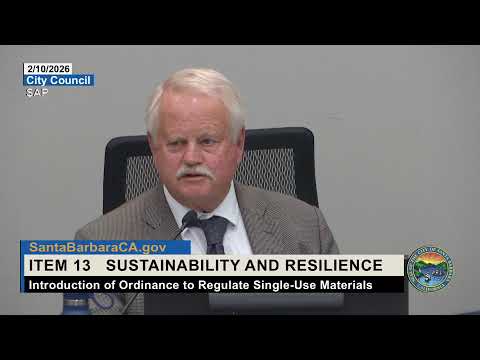
Council approved an ordinance to amend Municipal Code chapters 9.16 and 9.165 and repeal chapter 9.15, a staff presentation said. The ordinance adds rigid polystyrene products to the city’s ban, establishes a compostability standard for disposable to‑go foodware, phases in reusable foodware requirements for on‑site dining, and prohibits retail sale and distribution of certain Mylar balloons and plastic/mylar confetti. The proposal also limits the sale and distribution of small (8‑fluid ounce) plastic water bottles and bars aseptic beverage containers at city facilities, staff said.
“Local ordinances can help reduce the impact of plastic on our community,” Daniela Rosales, Clean Community Division, said during the presentation, emphasizing education, financial assistance and phased implementation to help businesses transition. Rosales told council staff had surveyed 282 businesses and found 56 used disposables for on‑site service; the department also visited 157 businesses door to door. Rosales said the city piloted a reusable cup program at Dune Coffee that resulted in about 17,000 reusable cup uses during the pilot period.
Supporters at the podium urged action to protect beaches and marine habitats. “Education wasn’t enough to change behavior,” Penny Owens, education director for Channel Keeper, said, pointing to cleanup work that still recovers Mylar and other plastics from beaches and islands. Several environmental speakers said the measures align with a regional move to reduce single‑use waste.
Opponents — including balloon artists, distributors and the Coalition for Responsible Celebration — argued a sale ban would shift purchases online or to neighboring jurisdictions and harm small local businesses. “Banning the sale or use of balloons does not address that behavior,” Maria Stockham of the Coalition said, urging targeted education, permitting or conditioning of certain uses instead of a sales ban.
Council discussion focused on implementation details and potential economic impacts on small operators. Members asked about exemptions for specialized packaging (examples cited included rotisserie chicken trays and food safety considerations), whether online purchases could be regulated (staff and the city attorney said local jurisdiction cannot regulate interstate online commerce), and enforcement mechanisms. Staff said enforcement will be handled by the Sustainability and Resilience code enforcement team, with the ordinance using the city’s standard penalty language (first violation a written notice; subsequent violations range from $100 to $250).
Mayor Pro Tem Sneddon moved to approve the ordinance and Council member Harmon seconded. The roll call recorded four votes in favor (Council members Santa Maria, Gutierrez, Sneddon and Harmon), one recorded “no” by the mayor’s seat as entered in the minutes, an abstention by Council member Friedman and one member absent. The motion passed.
The ordinance includes exemptions for emergencies, social services and public‑health situations, and allows businesses to apply for temporary exemptions where alternatives are infeasible, staff said. Rosales said the city will offer outreach in English and Spanish and explore grants and partnerships — including a possible reusable cup wash service — to support businesses during the phased rollout.
Council directed staff to return with final ordinance language and implementation details; the report did not specify exact effective dates in the presentation. The council adjourned with the ordinance approved and staff tasked with continued education and phased enforcement.