
Clay County approves Lake Geneva restoration using state grant and local funds
Get AI-powered insights, summaries, and transcripts
Subscribe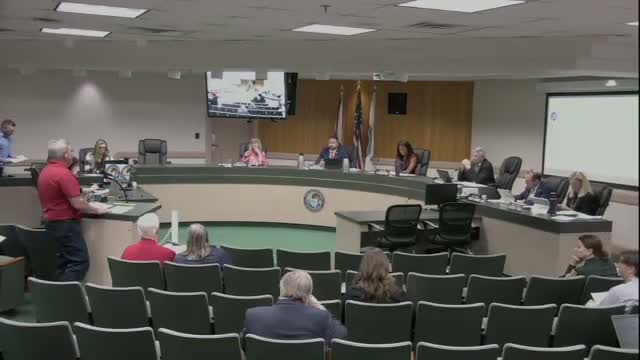
Summary
After public testimony and staff briefing, the county approved a phased Lake Geneva restoration project supported by a $250,000 state grant, local budget funds and a $41,000 city contribution; the plan uses contractor task orders and volunteer work to restore lake levels and remove hazardous timber.
The Clay County Board of County Commissioners on Feb. 10 approved a phased restoration of Lake Geneva aimed at restoring historic lake levels and removing trees that officials say would die if water levels rise.
Scott Slater of Save Our Lakes urged the board to "vote yes and approve that item," saying the aquifer recharge pipeline in the plan will "restore our lake levels according to the models" and prevent dead timber from remaining in exposed lake beds.
Staff described the project's financing and scope: an earlier City of Keystone bid that sought $1,648,000 to clear all priority areas proved unaffordable, officials said, so the county re-bid with state grant funding attached. County staff said they secured a $250,000 state grant, identified roughly $154,467 remaining in the Keystone Heights Lakes project budget, and reported the City of Keystone approved applying $41,000 toward the work. The county intends to proceed using task orders tied to available funding so it can complete early phases now and leave later phases pending additional contributions.
During discussion commissioners and staff described how the work will be phased and constrained by state permits for work on submerged lands. Staff said the contractor will not remove roots below ground level (root stumps will remain) and that trees under certain diameters will be left for volunteers to clear in later phases. Transportation and permitting partners — including the Water Management District — were credited for obtaining necessary submerged-lands permits.
Commissioners and residents stressed both ecological and economic benefits: supporters said restoring water levels would protect property values and support recreation and tourism, while some asked how long the program would require follow-up maintenance. Staff said they expect the construction and initial work to start in March and that lake filling and ecosystem recovery will occur over multiple years (estimates discussed ranged from two to four years for measurable filling and habitat change). The board approved the item unanimously.
The county said it will use volunteer groups, awarded task orders to the low bidder for initial phases, and continue outreach to regional partners for additional funding toward later phases of the project.
The next procedural step is contract execution and issuing the first task order so clearing can begin while permitting and interlocal coordination continue.