Get Full Government Meeting Transcripts, Videos, & Alerts Forever!
Get email alerts on the Training And Ordinance Update topic
No spam. Unsubscribe anytime.
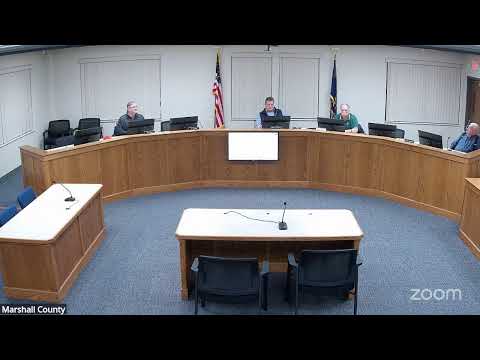
Marshall County zoning board holds training, reviews procedure and ordinance updates
Summary
At its Feb. 10 meeting the Marshall County Board of Zoning Appeals used a scheduled session for member training covering authority under Indiana Code, variance criteria, public‑notice rules and pending ordinance updates including a battery storage ordinance and a carbon sequestration ban.
The Marshall County Board of Zoning Appeals on Feb. 10 held a training session for new and continuing members that reviewed the board’s statutory authority, decision standards and meeting procedures.
The session, led by planning staff, cited the Indiana Code provisions governing BZA authority and walked members through the main chapters of the Marshall County zoning ordinance used most often in day‑to‑day decisions. Trainer comments emphasized that the BZA’s role is to consider development‑standard variances, use variances, special uses and administrative appeals for county‑zoned property outside municipal corporate limits and two‑mile buffers. “The authority, that you guys have, that the board zoning appeals have, is, provided by Indiana code 3674901 a,” the trainer said during the presentation.
Why it matters: the meeting occurred as the county updates several sections of its zoning ordinance to address newer land‑use topics and procedural gaps. Staff told members the ordinance committee — originally convened for a battery energy storage systems ordinance — will assist with wider updates to address items such as tiny homes, home‑based businesses and new technical issues. The trainer noted the battery energy storage ordinance had been recommended for approval by the planning commission and would move to the county commissioners.
Key points and procedure: trainers reviewed findings‑of‑fact required for variances (public health and safety, effect on adjacent property values, practical difficulty and prohibition on granting variances solely for economic gain) and described how administrative appeals are limited to written findings that a prior administrative decision was inconsistent with the ordinance. Staff recommended members document clearer, ordinance‑referenced findings in meeting records to strengthen decisions against challenge.
Public‑notice and case management: staff said public notices are published in the Plymouth Pilot and mailed to adjacent property owners (within 300 feet or two properties deep), with a 10‑day publication timeline. Members were advised to ask for applicant materials in advance so staff reports can present visuals and findings of fact during hearings. The trainer also encouraged site visits and use of GIS and Street View for review, and said technical review (TRC) provides staff expertise on drainage and surveying.
Ordinance trends and enforcement: staff and members discussed increasing numbers of “home workshop” and home‑business applications and noted several ordinance changes and moratoria are under review. The trainer said the county had recently added a carbon sequestration ban and is addressing battery storage rules.
Next steps: staff said they will continue ordinance revisions with the ordinance committee and provide guidance and templates to improve the written findings submitted with each decision. The board scheduled its next meeting for March 10, 2026.