Reed highlights $50M Montgomery Forward, road work and a first zoning rewrite in decades
Loading...
Summary
Mayor Reed said a $50 million Montgomery Forward program and expanded paving, sidewalk and blight-removal work show tangible progress; he also announced a multi-year modernization of the Montgomery zoning ordinance and asked for public input on technical standards.
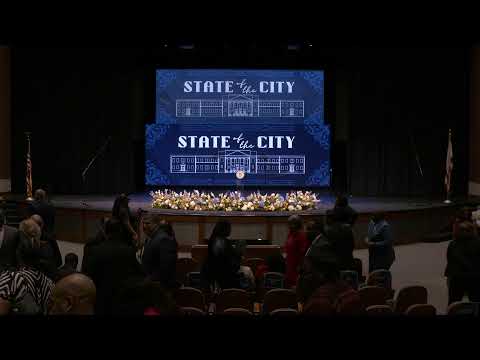
Mayor Steven L. Reed used the State of the City address to outline capital and planning priorities, citing a $50 million Montgomery Forward investment and a range of public‑works accomplishments.
Reed said the Montgomery Forward program has been used to revitalize parks, fire stations and community centers and tied those investments to improved service delivery. He listed specific public‑works outputs, saying the city “pave[d] more than 9.5 miles of roadway,” repaired thousands of feet of sidewalks, filled thousands of potholes, and restored curb and gutter in multiple locations.
The mayor announced that the city is undertaking the first zoning‑ordinance modernization in decades to make it easier to attract investment and support small development. He invited residents to give feedback on detailed technical items such as building setbacks and sign dimensions, saying the administration wants public input on how future development should fit neighborhood contexts.
On connectivity and transit infrastructure, Reed highlighted partnerships and investments — including a cited $60,000,000 state rail expansion at the Port of Mobile that he said supports an inland port project — and broadband work with private providers to extend fiber and middle‑mile capacity in underserved areas.
Reed described these moves as part of a long‑term plan to restore investment in historically disadvantaged neighborhoods such as Centennial Hill and Patterson Court and to prepare the city for growth.