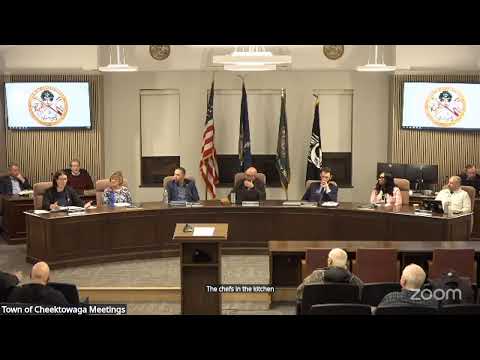
Cheektowaga Town Board tables resolution limiting local cooperation with civil immigration enforcement
Loading...
Summary
After an extended public comment period and board discussion, Cheektowaga Town Board voted to table Resolution 2026-92, which would have affirmed that town resources not be used for civil immigration enforcement except when required by judicial warrant or criminal warrant.
The Cheektowaga Town Board tabled a proposed resolution on Feb. 10, 2026, that would have clarified and limited the town’s use of personnel, facilities and information for civil immigration enforcement.
Resolution 2026-92, sponsored by Council Members Steven Nowicki, Monica Elderkin and Tiffany Lewis, said the town would not authorize or fund use of town resources for civil immigration enforcement "except where required by a judicial warrant, court order, or verified criminal warrant." The sponsors said the measure was intended to reaffirm state law and existing Cheektowaga Police Department policy while protecting community trust and local resources.
Public commenters were sharply divided. Supporters warned that local cooperation with immigration enforcement risks legal exposure and harms community trust. "When local police blur the line between community safety and immigration enforcement, they risk repeating New York City's mistake," said Cynthia Suggs, citing historical litigation and settlements. Jennifer Bitterman argued the town’s reliance on policies from Lexipol — a private policy vendor — left residents vulnerable; she said, "Your LexiPro manual is a failure." Several speakers cited DHS and detention-center statistics to argue that many detainees are not violent and to emphasize humanitarian concerns.
Opponents and some former law enforcement speakers said Cheektowaga officers do not target immigrants and warned of unintended consequences if local cooperation with other agencies were restricted. Tony Filipski, a retired Cheektowaga police officer, said, "The Cheektowaga Police do not ever go out searching for immigrants," and urged the board to prioritize public safety and existing interagency relationships.
During board discussion, sponsors and other members acknowledged the issue’s nuance. Council Member Nowicki emphasized that the resolution was not a judgment of officers or a change to day-to-day criminal enforcement: "This does not, and I repeat, does not stop CPD from enforcing criminal laws or working with federal authorities when public safety is involved." Other board members pressed for more stakeholder engagement, suggested forming a police advisory board, and raised concerns about enforcement interactions with state and neighboring agencies.
A motion to table the resolution was made and seconded; the motion carried, and the resolution was deferred for further discussion and possible amendment. Board sponsors and several members said they intend to continue conversations with the police department, legal counsel and community stakeholders before bringing a revised policy back for a future meeting.
Next steps: the resolution is tabled; sponsors indicated they will pursue further discussion with the chief, consider advisory-board formation, and monitor related state-level legislation and attorney-general guidance before reintroducing any action.