
Planning commission forwards major zoning rewrite and approves two zoning map changes
Get AI-powered insights, summaries, and transcripts
Sign Up Free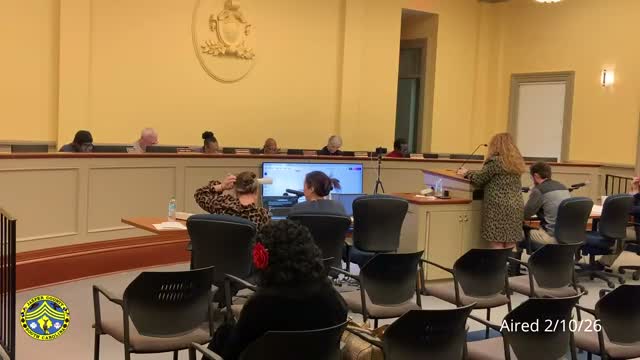
Summary
The commission voted to forward a revised U-Haul Overlay District ordinance (removing RP-10 and adding PDD standards) to county council while approving rezoning requests for an 8-acre residential minor subdivision and a Bella Mulch industrial site; the ordinance debate included public legal and environmental concerns.
The Jasper County Planning Commission spent the evening reviewing text and map amendments to the county zoning ordinance, considering several zoning map amendments and a conceptual major-subdivision plan.
Ordinance revisions and U-Haul Overlay District
Staff presented revisions to a proposed U-Haul Overlay District and related ordinance text, a years-long effort tied to the Bridal River plan. Major edits staff described included removal of the previously proposed RP-10 district and the related Article 22 small-lot subdivision provisions; creation of a smaller-scale Village Commercial category for certain stretches of Highway 462; and new planned-development-district (PDD) standards for developments of 10 acres or 10 lots or more.
Under the PDD language staff proposed, developers of larger projects must demonstrate they will not cause adverse impacts to infrastructure or public services; the PDD provisions include a maximum density of one unit per acre, a 50-foot continuous landscape buffer parallel to the highway corridor and a requirement that at least 30% of a site be permanently protected open space (with limits on how much wetland may count toward that total).
The staff package also proposed countywide changes such as a requirement of two acres minimum where horses are conditionally allowed (one acre per horse) and clarified septic-reserve language and setback rules. Planning staff circulated a draft list of high-impact uses they proposed prohibiting in the overlay district (large distribution centers, regional retail, mining, large-scale septic systems, and similar uses) but commissioners expressed concern about prohibiting smaller local businesses and asked county council to consider the prohibited-uses list.
Public comment highlighted two themes: legal risk and environmental protection. Land-use attorney Nicole Scott warned the commission about potential legal challenges including inverse-condemnation and equal-protection claims if the ordinance were applied too broadly. Residents from historically sensitive areas urged strict protections to preserve waterways and the rural character of sections east of Highway 462.
After debate the commission voted to forward the ordinance to county council with staff changes, including a proposed cap on accessory-structure size in Village Commercial (the commission recommended 1,500 square feet) and without adopting the draft prohibited-uses list at this time, leaving those choices for county council review.
Rezoning and subdivision actions
The commission approved a zoning map amendment for tax map 0400002150, an 8-acre parcel on Elaine Farm Road, to change from Rural Preservation to Residential so the owner can divide the parcel into four lots under the minor-subdivision rules (staff recommended approval and the commission voted in favor).
The body also approved a request to rezone 11.2 acres on Cato Bay (tax map 0440002001) to Industrial Development to accommodate Bella Mulch, a mulch processing and recycling business seeking to relocate into unincorporated Jasper County. Company owner Frank Kelly and engineer Willie Powell described the operation as reuse of clean wood debris into landscape mulch for wholesale and retail distribution; staff recommended approval and the commission accepted the recommendation.
Conceptual review: major subdivision on Tarboro Road
Staff presented a conceptual major-subdivision plan for a 43.78-acre site on Tarboro Road proposing 28 single-family lots (1–2.5 acres), two open-space lots and a stormwater-management area; engineers said the plan met lot-size and setback requirements on paper and would be phased over time. Commissioners pressed staff and the applicant on sidewalks, DOT encroachment requirements for access, septic/percolation testing and whether the county would accept internal roads for maintenance (staff said those details will be addressed during plan review; roads were expected to be maintained by an HOA or developer until criteria for county adoption are met).
What happens next: the commission forwarded the ordinance changes to county council for formal consideration and sent the approved rezoning items to be recorded; the conceptual subdivision will return for formal plan review and final approvals once the applicant completes engineering and permitting.