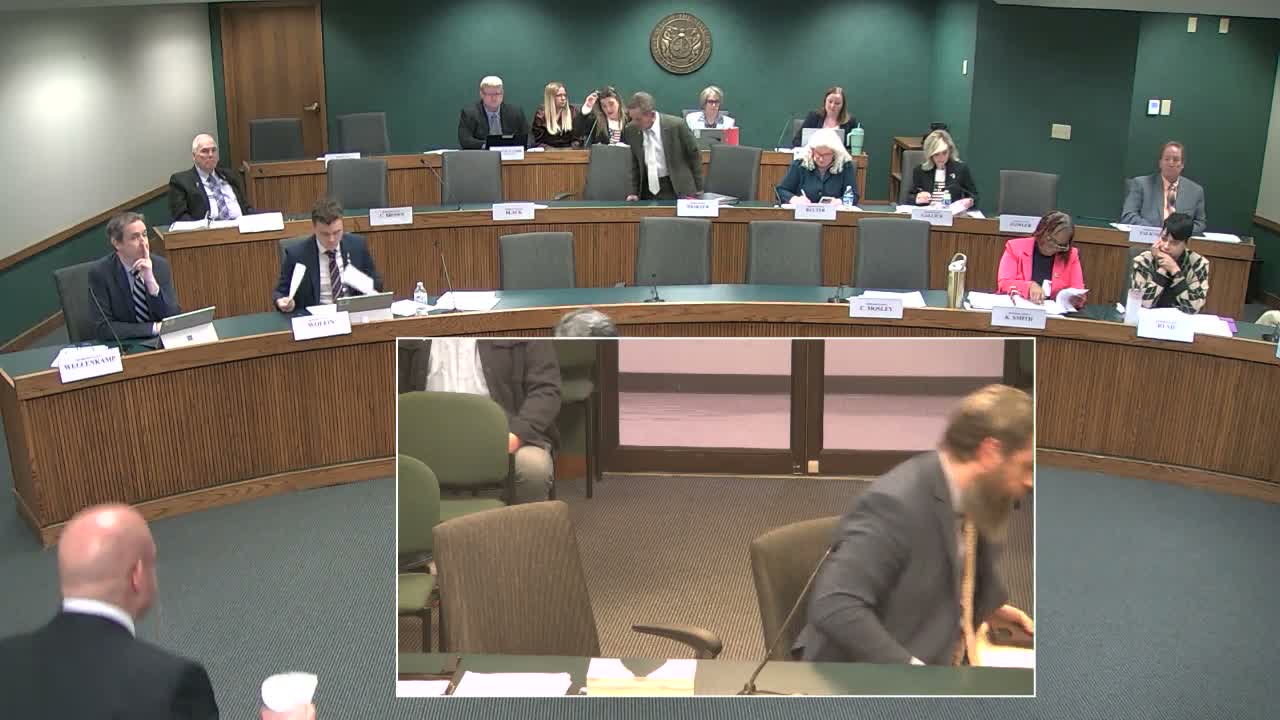
Hearing on HB 3113 focuses on naloxone in public buildings, school education and treating drug deaths as investigations
Loading...
Summary
Rep. Anne Kelly presented HB 3113 to require naloxone (Narcan) in public buildings, establish a fentanyl awareness month, require grades 6–12 education and mandate law‑enforcement training and full investigations of drug‑related deaths; multiple family members urged passage and recommended using opioid settlement funds for curriculum.
Rep. Anne Kelly (District 127) told the Committee on Intergovernmental Affairs that House Bill 3113 is a comprehensive response to the state's fentanyl crisis. "This bill mandates that all public buildings maintain a supply of Naloxone," Kelly said, and adds an education requirement for students in grades 6–12, designates an October Fentanyl Poisoning Awareness Month, and requires law enforcement training and investigation of drug‑related deaths.
Committee members asked clarifying questions about scope and funding. Rep. Wolfen asked what the bill means by "public building" and whether it would include private businesses; Rep. Hales cited "section 8.83" as the statutory definition and described it as applying to government buildings. Kelly said the bill's education component would be left to local school control to implement and suggested the committee could work on definitions and funding mechanisms.
Family members and advocates provided emotional testimony in support. Laura Woody (Lost Voices of Fentanyl) described losing her son and urged naloxone be available in classrooms, vehicles and public places; she recommended using opioid settlement funds to pay for curriculum rather than costly district programs. "Every number represents a person, a son, a daughter," Woody said.
Several witnesses asked that drug‑related deaths be treated as crime‑scene investigations to preserve evidence and to increase the likelihood of identifying suppliers. Dana Blanar, whose son Zachary died from fentanyl in product she said was mistaken for marijuana, said HB 3113 "recognizes fentanyl poisoning for what it is. It's a public safety crisis, not a personal failure," and urged that evidence be preserved and investigators be trained.
Other speakers (Shannon Thomas, Ryan Thomas, Lily Compton, Chuck Carroll, Crystal Catron) recounted personal losses, gaps in local naloxone availability and failures they described in death investigations; many urged early school education and broader naloxone access beyond police department distribution points. Funding proposals mentioned opioid settlement money and existing state resources such as the Missouri Institute of Mental Health as possible sources for naloxone and curriculum support.
No committee vote on HB 3113 is recorded in the transcript; the hearing concluded after public testimony. The bill's key provisions in the hearing record are naloxone availability in public buildings, a required education program for grades 6–12 (with discussion about whether younger grades should be included), designation of an awareness month, mandatory law‑enforcement training and a requirement that drug‑related deaths be fully investigated to preserve evidence.
Next steps: the committee closed the hearing; further action will depend on scheduling for committee markup or floor consideration.